View Full Library
Breakouts
Finances by the Generation, From the Generations
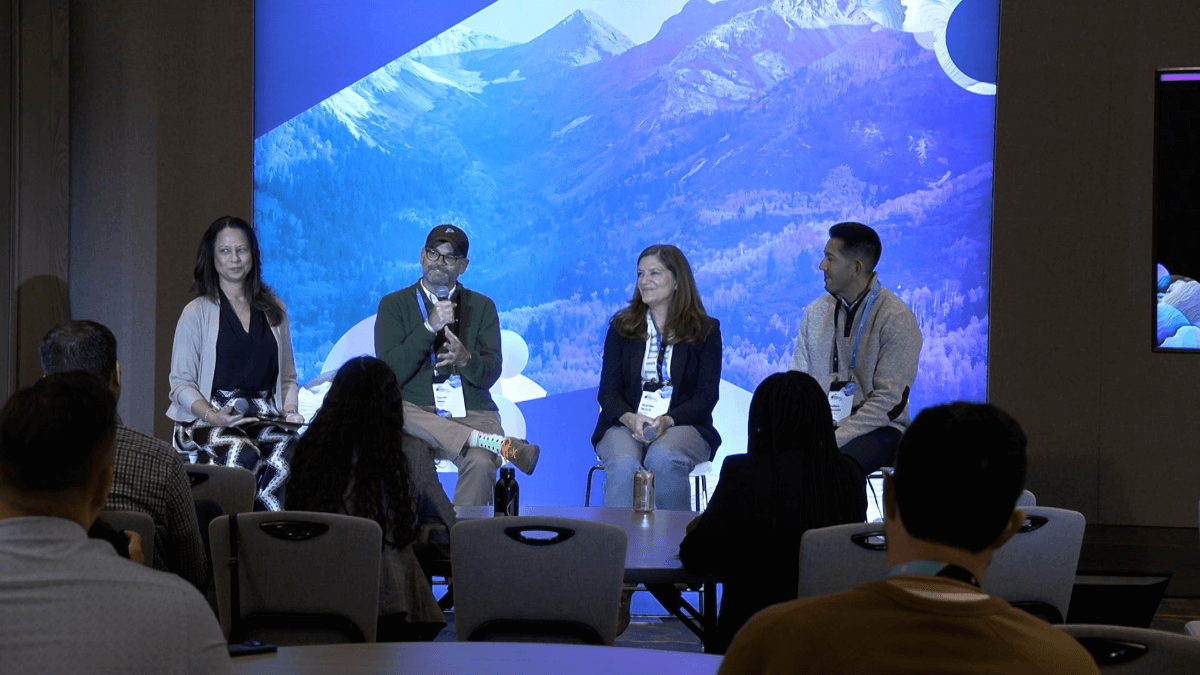
From Gen Alpha to Baby Boomer, we're putting together a panel of the consumers we all serve for an unscripted conversation about what they really think about their financial providers, how they manage their money, and what they actually want. Walk away with real-world examples, firsthand data, and best practices to reach, engage, and keep consumers.
Transcript
Thank
You so much. I'm
not sure which generation you are applauding for,
but we will find out in this session.
I am very excited.
I feel like in financial services
we talk about generations a lot,
but we never actually get to hear from people
who are in all the generations that we talk about.
So that is the purpose of this discussion.
And, I'm gonna introduce our panelists in
a somewhat different way than I normally do
by talking first about their generation
and then introducing each member after I say their name.
Give them a nice round of applause.
If you have special feelings
for a particular generation, it's yours.
It's your parents' generation, it's your kids' generation.
Give 'em a little extra round of applause
and we'll see where we get to.
All right. So, starting us off
we have our Baby Boomer representative.
according to my notes
Baby Boomers are those born roughly between 1946
and 1964.
You will note as I go through the rest
of the generations, that is an unusually large generation,
as demographers have noted for decades, which is why,
there's also the definition
of a sub generation within baby boomers known
as Generation Jones.
And, I think you'd probably, yes sir,
recognize that as your generation.
So let's give it up
for our Baby Boomer representative, Bob.
Lovely, next we threw a little curve ball in
because we have two representatives of Gen X. Gen X,
the forgotten generation, the Keanu Reeves generation.
They are those born roughly
between 1965 and 1980.
And again, this is a theme
that's gonna come up over the course of our discussion,
but the lines between generations are a little bit blurred.
So, very delighted to have two different members
of Generation X.
We have Mark, and we have Molly.
It seemed like we might see,
we've got some Gen Xers back there.
All right. They're feeling like feelings about being
left out or never talked about.
We will get into that. I'm Alex.
I am a member of the millennial generation.
We used to be cool,
I remember when I got into banking,
Millennials were very exciting.
Everyone wanted to know what we thought and who we were.
We're old news now, as you're about to find out.
I'm, I have been replaced.
But, millennials are again, roughly those born
between 1981 and 1994
to 1996, somewhere in there.
And again, you'll notice as we go further, that
the generational differences
and the lines between 'em are a little more fluid.
That's 'cause we're still trying to sort of figure out
what separates different generations.
On my left, delighted to have the generation
that's replacing me, Gen Z. Gen Z as
those born again, roughly between 1995 to 1997,
and roughly 2010 to 2012.
So give it up for the Gen Z representative on our panel.
Lisa.
I should note that Lisa very
generously took some time out from studying
for her midterms to join us.
But, you know, go University of Utah.
So she's representing
and we really appreciate you being here.
And then last but not least the most mysterious
and coveted of all the generations.
Gen Alpha. Gen Alpha's a little hard
to define because they're new.
They are those born roughly between 2009, 2010
to now, right?
So anyone born all the way up until either last year
or maybe even this year, are gen Alphas.
And we are delighted
that our Gen Alpha representative was able to get his mom
to excuse his absence from school today.
I think he should get school credit
for joining us here today.
Jack.
Okay. So to introduce our generations
and put it in the financial services context,
we're gonna start with a little lightning round game of,
have you ever, so here's how it's gonna work.
I'm gonna ask a series of questions.
If anyone on the panel has done this activity,
they will raise their hands.
We will attempt to tease out some
of the financial services differences
between different generations.
Jack, you have special dispensation given
that you're not 18 to cheat a little bit.
So if some of these activities I mentioned are one
that you haven't done, but that you would know how to do
and be interested in doing, feel free to raise your hand.
Okay. All right. Here we go.
First question, have you ever opened a financial account
in a branch?
A bank branch?
Wow. Wow. We didn't practice any of this.
You guys, that has taken me the first time.
All of us have opened a financial account on the branch.
All right. Excellent. Second question.
Have you ever opened a financial account entirely online?
Oh my goodness. Okay. Excellent.
Have you ever paid someone with a physical check?
Okay. All right. Now we're starting
to tease out some generational differences.
Have you ever paid someone with a P2P payment app,
Like Cash App, Venmo, or Zelle? Okay.
All right. Market share.
Have you ever gotten
financial advice on YouTube or TikTok?
Oh yeah. Wow.
I think Bob wants to be with the kids.
He wants to be part of the cool, the cool group.
All right.
Have you ever gotten financial advice from an AI chat bot?
Oh, yeah. This is really interesting.
This like, alliance that's being formed on either side
of the stage, Mark and Molly and I are like, no.
All right. You,
You have to realize, I, my kids are Millennials
and my grandchildren are Z or
Alpha, Alpha, Z. Alpha, Alpha.
Yeah. Okay. All right. So he's down with the kids.
All right. Have you ever sat down
with a financial advisor in person?
Okay, now we're really breaking up the group. Okay.
Have you ever used a Traveler's check? Oh, yeah.
Do you guys know what a traveler's check is?
No idea. Oh, Okay.
I miss them. That's, that's fine.
You're never gonna have to know that.
So you're, you're good. You're all set.
Have you ever bought a cryptocurrency?
Am I just by myself out here?
Thank you for those raising your hands in the audience.
I appreciate you. Good for you guys. Well done.
Have you ever balanced a checkbook?
No. Okay. That anything check related ends right here.
Okay, Um, have you ever checked your credit score?
Okay. Jack, it's super easy to understand, You're gonna love it.
I can already tell. Yeah,
It's the best. You're just gonna
love it. Makes a ton of sense.
Really intuitive. Final question,
and I'm cheating a little bit
'cause this is not a financial services question,
but it really will reveal the differences.
Have you ever watched the film K-Pop Demon Hunters?
Okay. Just me and Jack. I knew it.
Been there, done that. You've never done that?
I said I've been there, done that. You've
been there. Okay. All right.
That's what I would've figured. All right. Okay.
So that was instructive.
Uh, I'm definitely gonna be taking
notes on all of those answers.
All right. Next question I wanted to ask,
and we're gonna get a little more into history
and sort of how you got into financial services is
your money origin story.
So I'm very curious to understand if each of you could kind
of briefly explain: how did you learn about money?
Like when you first sort of got introduced to
how money works or the concept of money, like what was
an early formative experience?
And Bob, we'll start with wisdom,
so we'll start on your end. Why don't you go first?
Well, I was probably the generation that,
that my parents survived the Great Depression.
Yeah. My parents survived World War II.
My dad was a veteran, World War II.
And they lived day to day. Mm-hmm.
Really, they money was, actually bartering,
living in rural areas,
They would barter more than they used money. Yeah.
And that influenced my dad tremendously,
which influenced me
and made me want to make sure
that I would become financially independent.
My parents became dependent on strictly social security.
They had no retirement. They didn't plan for retirement.
They didn't know how to do that. Right.
There was no education for them on retirement.
So learning from that
and growing up that way, from working
starting at age 15, I decided I wanted
to be a financial independent.
And, I made sure
that my kids are doing the same. mm-hmm.
That they understand those things.
So, that's really where, where I started to say,
I'm it, I'm responsible for my financial situation,
so I need to take charge and do
that. And that was something
you internalized pretty early on.
Absolutely. Yeah. Absolutely. Mark, how about you?
What's this sort of a formative
early experience around money?
Well, I likewise worked when I was a, you know,
13, 14 teenager, paper routes and that type of thing.
Sure. I'm a saver, I'm not a spender.
But, I liked the things that money enabled me to do.
You know, once in a while you go out
and you take a girl on a date
or whatever else, you know, you buy a corsage.
I enjoyed the benefits of that.
I worked very hard on our farm as well, without pay.
You know, I got room and board, whatever, you know, they fed me.
And I realized that the money is kind
of the key to being able to do things you wanna do.
Yeah. And so I was, I saved, I'm a saver
Same. Yeah.
Molly, how about you?
I find our stories, I think it's a generational thing,
often the same, because I look at my kids now,
and their take on money and savings
and that sort of thing is totally different.
But, I came from a family of seven kids,
,you know, and so you go back to school
and it's like, okay, a new pair of jeans,
maybe a couple shirts
and a new pair of shoes if you were lucky.
And anything besides that you had to do for yourself.
Sure. So starting at, I think 12, we were able to start,
like, go out to the berry farms
and pick berries and stuff to make money.
Those are the kinds of jobs we
were able to do when we were young.
And that enabled us to kind of save up
for some of those things that you wanted.
And, I was single mom at 20,
so money, we were always very careful with how I spent,
how I saved, how I thought about money.
Totally. I think I hear your story is wonderful,
So I can't wait to get to them.
But besides you, my kids are not like that.
It'sa different thing. But yeah.
From a very young age, we had to learn to
be thinking about money a little bit differently than
maybe they do these days.
That makes sense. I mean, I think another theme
that's probably gonna be consistent across everyone is,
like a certain flavor of entrepreneurship.
And I think the entrepreneurship probably is different,
but like, just do a quick show of hands.
Have had a job or had a job in high school
or even earlier trying to make money sort
of independently, I assume?
Okay. Pretty close. I mean,
My story's very similar to that.
I remember, uh,
lemonade stand was the thing we did to make money.
And, my parents took it very seriously, um,
and outfitted us with all the stuff.
But, my mom also charged all of the materials back to us
and did not give us a break on any of it.
And, that was a pretty brutal early lesson
in entrepreneurship.
And the fact that, you know, money doesn't grow on trees,
lemons grow on trees, but it costs money
to get those lemons to make into lemonade.
So very similar in terms
of like early lessons in entrepreneurship
and kind of the value of money.
Lisa, how about you? What's an early experience for you?
I feel like money was kind of
Something that I
never really thought about growing up.
So like, 'cause I,
I feel like my parents always took care of things.
It's like we go out to eat, like, you don't know
'cause you're not paying for the bill.
Sure. So I feel like it's always been like something
that's kind of like a concept that you don't really grasp
until you start getting into it.
Mm-hmm. So I think my,
like my money origin story probably began in high school.
Mm-hmm. So
that was like when my parents like started letting me
take on the responsibility of paying my host family
and the responsibility
of paying my own high school tuition.
Mm-hmm. So I think, just like even the act
of having that money in your account
and like, seeing it go
and seeing where it's allocated.
Mm-hmm. And it just really gave me much more
appreciation for my education.
And, for those of you who
don't know my background, I'm an international student, so
my experience might be a little bit different from Gen
X, but I think just for me personally
in high school was kind of like a huge epiphany
that I had, that things like cost money
and then like, it just growing up, I feel like
that also motivated me a lot in school.
Yeah. Because, you know, where
that money came from and you know where it's going.
And then I feel like just the act
of like being more involved in your own life
and like paying for your own expenses,
like really changed that for me. Yeah.
Absolutely. And Jack, how about you?
So when I was 11 years old, I was wanting to save
for GoPro for my YouTube channel. And
This is all very consistent generationally so far.
So I started working some little jobs.
I walk dogs for a long time
and I do garbage cans for some of my neighbors.
Then when I turned 12, I started umpiring for youth leagues.
And it was really hard. It was fun.
Made some great money, to save ut for a car.
I ended up saving a little under $8,000 for my first car.
Wow. Wow. To be able to,
Yeah. How about a round of
applause for Jack on that,
that's pretty impressive.
And I actually drove that car that I bought up
here today with my dad.
Oh, yes. Yes. That's awesome. That's fantastic.
I love that. So early focus on saving,
working odd jobs to earn what you
Need to get. and not spending
it on video games.
Yes, yes. Which is, uh spending is a topic
that's gonna come up again.
So, kind of flipping the page on that a little bit,
if we were to kind of fast forward to right now,
and again, I think one of the things
that's interesting about the generational discussion on
financial services is to a degree, it's differences in terms
of when you grew up and
what was happening in the world at that time.
But I also think a lot of it just relates to kind of
where you are in your life in that stage of your life.
So I'd be curious to kind of hear about
what your biggest money management challenge is right now,
and like what the priority
is right now and how you think about it.
And we'll go the opposite direction.
So Jack, why don't you start there?
So, one of my most challenging things is when I'm,
umpiring, the league that I work
for mostly pays me in cash.
So getting cash
and turning it into my digital bank is one
of my biggest challenges.
But instead of being my challenge, I turn it to my mom,
make it her problem, give her all my
money. And she puts it in.
So mom
is the vehicle to transfer the cash into. Yeah. Yeah.
Somehow it just gets into the digital bank account. Yep.
As long as it's there, I don't care.
I love that. Lisa, how about you?
Okay. I feel like I speak for a lot of people
who are in my generation.
When I say that the biggest money challenge is to,
to like not spend it.
Yep. And, I'm sure you guys have kids who are like,
potentially in my generation,
but it's just like,
I feel like when you're going into your twenties, a lot
of people are like, oh, but you have to live it.
You have to like go travel.
This is the youngest you'll ever be.
So I think a lot of it is like trying to balance like,
where should I spend and where I should save, like
how much I should consider for my future,
and like how much I should be living in my present?
So I feel like a lot of times,
the big challenge is just like
figuring out if I should go on this trip or not,
or like, if I should like buy this thing
that all my friends are buying
or if I should, put it all into savings
and just sit there and wait until my money grows.
And then once I'm 30 or 40,
and then I can finally spend like, spend on things.
So it's just kind of like balancing
like those opposing voices.
That makes sense. Can I ask a follow up question?
Yes. When you talk about sort of the temptation
to spend now, particularly on like experiences,
and those kind of things and what your friends are doing,
how much of that is influenced by like social media
or the internet?
You Oh yeah, a
huge percent. I feel like it's mostly social media.
'cause it's like, all of those videos
that I would see, or my friends would see
or get on their feed that are like,
oh, I moved to Bali.
Or like, I spent a whole summer in Italy.
Or it's videos that where it's like,
if you don't do this now, you'll never be able
to do it again and you'll never be this young.
And then you have to do it now.
Or it's like, you should like drop outta college
or take a semester abroad
or just a lot of information like that.
Yeah. But like, and then I get FOMO
and then my friends get FOMO
and then we're like, oh, now we need
to all drop outta college and like go travel. So yeah.
That's really interesting. Yeah.
I think social media is just like a FOMO machine in a lot
of ways. So that seems consistent.
I will say briefly that
for me the biggest challenge is time
management as much as it is money.
Right. A lot of financial things that I want
to do are just things that require a certain amount of time,
whether it's budgeting or planning
or sort of reallocating funds
or thinking about kinda long term.
It takes time. And I have three young kids at home.
I don't have any time. I don't have any spare time.
And so the time trade off
for like good money management is something
that I really struggle with right now
And is a priority.
Molly, how about you?
Time is a big issue for me as well. Yeah.
And, probably one of my,
because I'm in my fifties looking towards retirement,
I'm lucky that income wise we're doing okay.
So it was never super stress, you know, we just have
to think about saving for my husband
and I, what do we wanna do?
And 10 years from now we'll be living our life
and our present because we didn't get to do
that in our twenties. But Yeah.
When's your trip to Bali coming?
Exactly. Yeah.
The problem is, is we have six kids, two
of them have it figured out
and we have four who are all in their twenties
who are living their present.
Ah. You know, so somehow I'm like,
I'm working 60 hours a week and I'm lucky if,
and I think I mentioned to you before.
Yeah. They're working 30 hours a week, a couple, you know,
part-time shifts
and they're like, oh my God,
my boss doesn't wanna let me take more time off.
'cause I just went somewhere for a week a month ago,
or I went on that trip to Rome a couple months ago
and now I wanna go to Hawaii. And
Bosses are really annoying about that kind of stuff.
You know, it's, so my ideas of retirement are different
because my concern is, and I feel like we do tough love,
but my concern is before we knew what we were gonna have
for our future
And now with the, where the economy is
and where we're at these days, um,
economically in this country, being able
to buy a house Yeah.
Retirement, all those things
that our kids saw us being able to do.
Sure. They're really struggling to go, can I do this?
And now I'm like, well, we can't just go save and do
and go to Bali now we have to maybe be leaving something
for our kids 'cause they might not have those same
opportunities Right.
That we did. Right.
So it's just flipped in our minds what we can
and can't do moving forward.
Yeah. No, that makes a lot of sense.
Mark, I think
you're slightly further ahead in terms of… you just retired?
Correct. Did, so where,
are you right now in all of this?
So, having the luxury of being retired,
now I have all kinds of time.
Got your time back. Do whatever I want.
I am so jealous. every day's a Saturday. Oh my gosh.
And it's kind of nice and
you know, hopefully we have saved enough money
Sure. before we retired, you know, I've fearful
that our financial advisor
told us, yeah, go ahead and retire.
You got plenty of money or whatever right now
for me then it is all about timing.
So we can go do the things we want as terms
of vacations and that type of thing.
We have a budget and,
but it's all about timing for me right now.
What I'm trying to do, obviously is try to pay my share
of taxes, you know, legally within the law,
but also, you know, avoid the taxes.
I don't need to pay. Yeah.
So we're in the stage of, you know,
rolling our 401k into the
IRA, individual retirement account,
and then, timing, you know, Medicare kicks in
and then you've got Medicare costs at 65,
and then you've got to roll your traditional
IRA into the Roth.
And so that counts to you as income comes to you as income.
And so basically you've got that income
and then social security kicks in
and you've got that additional income.
And then you've got RMDs in the mid seventies.
And so basically it's trying to figure out the timing,
what's the best, you know, what counts to burn down,
how much money to take out each month,
what's the long term plan
for minimizing the amount of taxes.
'cause you don't wanna jump into the 35% tax bracket.
You wanna keep it low. And
so basically it's a, there's a strategy.
You can't just go into this blindly
and say, I'm going to, you know, maximize my social security
and get out, you know,
roll money into the Roth and all that kind of stuff.
So it's really for me, it's about timing,
the accounts and the, the sequence of events that,
that we have to, that I have to go through as a retiree
to make sure that I can minimize my taxes.
That's really interesting.
And the, the sequencing of that,
it sounds like a really complex challenge
And I'm sure there's resources out there.
I didn't take the time when I was working,
I was just accumulating money.
Sure. Yeah. As the last five years of my
employment, I was saving 30% of my paycheck.
Right. And
up to that it was, you know, 20%, maybe 10%.
And that would be my advice is to save.
But I had a lot of cash out there and you retire
and it's like, what do I do with this?
I had no clue. I had done no homework about how
to time the transactions the, you know, the,
monthly income, all that kind of stuff.
So I'm sure the resources are out there.
I didn't take the time to look at
'em, but that would be very helpful.
As for me as an engineer, I didn't really look at that.
I didn't really worry about it. And
now it's, it's all about timing. Totally.
Bob, how about you?
Well, more I worry about boring things. Taxes, right.
Inflation. Oh, sure.
Inflation, you know, the numbers they show you are nothing
representative of what we spend every day.
Sure. Yeah. Right.
I worry about stock market volatility
because all of my retirement accounts
and my taxable accounts are in the stock market.
Mostly in, I'm still in mostly in equities.
Probably 70% equities and 30% bonds.
But your timeframe for that,
for those investments is very different now.
Well, so I'm no longer telling people I'm retired
because I'm not really retired yet.
I'm not taking money from any of my retirement accounts.
I'm not signed up for Social Security yet.
Last month I signed up for Medicare
because I had to, I had no choice,
but I did sign up for Medicare.
But, I'm really just unemployed at this point
in time with no income.
Right. I do not have a paycheck coming in other
than some passive income.
Right. So I worry about taxes.
Like you mentioned, people think we're in retirement.
You don't have to worry about taxes.
You don't have anything to worry about.
That's not true. Taxes are a huge part
because if you've built up a large tax deferred,
you're gonna end up spending half of that as much
as half of that back in taxes.
Right. The other thing I worry about is are the cost
of healthcare expenses.
I'm glad you mentioned that. Right?
SoI did sign up for Medicare
and I immediately signed up for a supplement
Medicare supplement plan.
Yeah. I am understanding now
that my supplement plan will likely incur a
40% increase next year.
Mm-hmm. That's huge. Right.
To someone who hasn't had any,
I don't have any, I won't have any income.
I do have pensions,
but I'm not gonna start those for a couple more years.
Yeah. And then I won't start social security
for five more years actually.
Yeah. So that's,
those are the things that I worry about.
Well, I'm glad you mentioned healthcare, right.
And inflation broadly. 'cause I think that another thing
that impacts different generations very differently.
And Molly, you touched on it too with worrying about
what your kids are gonna have and
what opportunities they're gonna have is certain things are
just really expensive.
Right. And healthcare's a good example.
Housing is a huge example.
I don't know, I'd love to know from both of you,
Do you have thoughts on, do you ever
want to own a house?
Do you plan on buying a house?
Do you think that's achievable?
Lisa, maybe we can start with you.
I'm renting right now with my friends
and it's in this crappy little duplex,
but it's just like college housing.
So I feel like we're not doing too bad. Yeah.
Not too many roaches. Oh, that's good.
Some flies, but
like washers that don't work.
But I feel like that's just like kind of
what you live in when you're in college.
Yeah but in terms of looking ahead
and like seeing if I'll ever own is something,
that sends me into like a spiral
because it's like, there's so much unknown.
It's like, I don't know how it's gonna be with my job.
I don't know if I'm gonna have a job. Totally.
I don't know how the housing market is gonna be
by the time I get to a point in my life
where I could even have the money if I, if ever.
So I think the thought of that is just
on the back burner.
No, that makes sense. Jack, I mean
that's pretty far away for you, but
do you have any thoughts on that?
I would love to own a house, honestly,
the financial freedom that, that could give me crazy,
gimme tons of money to spend on my Fortnite account. Yeah.
Okay. I love it. See, he's financially savvy down there.
Another thing I wanted to ask about is, banks
and financial services providers.
We have a bunch of 'em in the room actually.
And, I was curious, kind of a two part question.
One is, how do you think banks
and financial services providers view your generation
or think about your generation
and how do you wish that they thought about your generation?
And Bob, we'll start with you and we'll go this way.
Well, for some reason, as soon as you turn 64, 65
financial organizations think you're no longer a consumer.
All the marketing that, you know,
you fill out these surveys, you get surveys from companies
and those, you fill out your age category
and as soon as you say 64, 65 on, and it's like, oh, okay.
Thank you for your input. And they move on.
So, I'd like them to realize that
the Baby Boomers
and I'm really at the generation Jones' end
of the far end of the Baby Boomers, the youngest part.
We are consumers.
We probably are the wealthiest middle income people ever.
Right. We have more money than ever to spend.
And what we're interested in is really products that
that increase our portfolio diversity.
So we're looking at a breadth of products.
We're also looking at things that ensure,
that mitigate financial risk.
So like guaranteed income,
that's something that I'm interested in.
When I was younger, couldn't care less about bonds,
couldn't care less about annuities
or anything that was guaranteed income.
Now I'm extremely interested in those products
and I'm dissatisfied with the number
or types of products and with how they're marketed.
So, I would like education.
This is a big thing.
Before I retired, my wife
and I spent 18 months researching retirement.
I mean, we watched every financial YouTube video out there.
I read every Reddit forum out there.
I looked at every Lincoln in those things.
And, uh, I read, we read seven books together.
We actually had book reports on Friday nights.
So we studied hard
and to finally make that decision to stop working.
Not retired yet, so stop working.
And one of the things
that we found deficient in the industry,
in the financial industry was education.
Somebody needs to help us educate ourselves on how
to retire, when to retire, when to take social security,
what to do about Medicare, what to do advantage plan,
supplement: somebody, help us with that.
Yeah. Right. And there's no one source for that information.
So,I think that's where the opportunity
for probably most of the financial institutions that
we're not just retirees anymore.
We've got a lot of money.
We still buy homes, we still buy boats. We still buy cars.
Uh, we have a lot of money to spend on those things.
So we're, we're really consumers,
but I feel like we've been left out.
Yeah, absolutely. Can I jump on that really quick?
Jump in, Yeah. Just because you were talking about
education and we're,
retired. Just skip 'cause it's in my head.
And when you're a certain age, you have
to jump on those things before it's gone,
but, I'm about 10 years out from retirement.
Yeah. And we've just been talking about, we need
to look into this a little bit more
and what do we have to change?
And, going into my bank
and I'm looking at the resources on there,
and there are retirement resources
and there's like 401k,
401 BC IRAs, Roth, I mean,
there's all this information.
Yeah. But then you click on
and then there's more information.
I mean, there's so much out there.
My husband has three degrees
and some major student loans still.
And this year everything changed
with student loans a little bit.
Right. So we went in to try
and re-look at how to redo a student loan repayment.
And they have a really nice website
where it's like, what is your age?
What is your income? You know, what are your goals?
What are you trying to get out of
your student loan repayment?
Yeah. Do you wanna pay it off the fastest?
Do you wanna pay off the least amount of money?
Do you want… You know, so there's all these options.
And so you click what's most important to you,
and then it just spits out a couple of options
and then you read the information.
So it was really simple.
I'm like, oh my God, why can't my retirement just say,
why can't everything be like that information?
Be that simple? Why can't I just say, this is my income,
this is where I'm at, this is what I wanna do, these are
what my goals are, and then you tell me
what the best products are and then I'll research it.
Totally. Because again, I am not retired.
I'm not almost retired.
I'm working 60 hours a week
and we're trying to make sure all the kids are okay.
So I don't have the time totally
to read all the books and do all the studying.
But I need to be doing it now.
Now is the time I have to be doing it.
So I want a simplified way to get the information.
And their answer was, you know,
set an appointment up with our financial advisor.
I'm like, I don't want him to sell
me a bunch of things I don't need.
I just wanna talk to him about the things
that I know I need to talk about.
So that is what I'm wanting a tool to do
that in an easy way.
And I seem to recall when we were asking the questions
before, you've never sat down with a
financial advisor before, I think.
Right. And so at this moment in life,
working 60 hours a week
and taking care of the kids, you can't fathom the
outside. And I don't know
what I wanna ask them.
And I don't want to spend hours having them go over all
those things I just said.
So I want someone to say, this is where you're at.
These are the things you wanna talk about,
and now let's set an appointment up with someone to,
zero in on those things specifically.
Totally. I will add,
just real quickly from a millennial perspective,
although like an old in my soul millennial, I'm so tired.
I would second your thing about
just time spent, right?
Like, I want advice.
I want to know, if you have a little bit more time,
like where do you wanna steer
to end up where you want to end up?
But I need it to be automated.
I need it to be simplified.
I can't take the time to learn about it
and parse out all the different options.
I certainly can't take the time to go meet
with a financial advisor.
So I would definitely plus one that,
Mark, how about you?
I was gonna say that
we have a really good financial advisor.
We had him for a number of years. His name is
Dimas and he's a great guy.
But I think he takes us to a certain point.
We get an hour and a half with him two
or three times a year, an hour and a half.
And he takes us to a certain point and we get there.
But I know there's more in the future.
I know that there's other things that, other ramifications.
And he takes us to a point, and I,
don't know if financial advisors do this on purpose,
but they don't, I'd like to see the whole plan laid out.
Like you mentioned that, you know,
it was step one, step two, step three.
In other words, you retire at 60 or 62
or 65, whatever it is, then you've got to find some
medical insurance until,
Medicare kicks in.
And if Medicare kicks in, then all of a sudden
you're taking your 401k
and you're rolling that over into an ira.
And then at some point you're gonna take
and roll that money into a Roth.
And if you take out $200,000
and put it into your Roth, that's income to you.
Yeah.And if you do that for a couple of years,
then your Medicare payments go up
because your income has gone up.
So there's something called Irma, all this stuff
that I didn't have any clue about,
you know, a couple of years ago.
All of a sudden I'm learning, and I wish I kind
of had a roadmap that says, okay, this age,
this happens, this age, this happens.
When you do this, this is happens.
These are the ramifications.
Because eventually what you wanna do, at least
what I wanna do is take the vast majority of the money
that I have in my IRA and roll it into my Roth.
So it grows tax free,
but there's penalties to doing that.
And there's ramifications.
And so it's all about timing
and I wanna wait until
social security, same kind of a thing.
But all of a sudden then you maximize your social security
and you get this ginormous social security check,
and then all of a sudden you're in your seventies
and RMDs kick in, and then you've got all this income
and it's like, what do I do with all this?
All of a sudden I'm in the 42% tax bracket.
So what I would really like to see is a roadmap.
I'm lazy. I'm sure it's out there somewhere.
I haven't investigated, I didn't read books,
I didn't prepare for retirement.
It's gotta be out there somewhere. But if you're saying
that you prepared for a year and a half
and you didn't find that, you know, maybe it doesn't exist.
A step-by-step roadmap.
This is what happens at 61, 62, 63 and kinda lay it all out
and tell me, if you do this, then this happens.
It triggers this. You have to understand there's a lot of,
interactions between your transactions
and the amount of tax you pay.
Don't worry the
government has a plan for your money.
Oh, I know they do. They have a plan.
I told my daughter, I said,
there's something called RMDs.
And I said, if you, they allow you…
And, I said, they make you take out a certain amount out
of your ira, they know how much is in there,
2 million, 3 million, 5 million.
They know how much is in there.
And there's this formula
and there's an advisor out there anyway
and they make you take out X amount per year.
She says they can't do that. And I
said, yes, they can. Just have
it all withheld,
you'll be fine.
So the answer, part of the answer to this is
I did go, resort to technology solution.
Retirement planning software.
There's lots of 'em out there.
They come in various forms of complexity.
I chose one called Bolden. There's another one called Pralana.
There's others,and I learned about them on YouTube
and I watched all the demos.
I went to those sites. I took all their videos,
took their training,
and then settled on one particular product.
But it helps me answer those questions.
About the complexity of unemployed
heading towards retirement. Well,
It's interesting too, right? Because
to your point about the financial advisor,
it does sometimes feel like a chiropractor where it's like,
I'll adjust you come back next week.
Right. And it's like, I'd actually like to know
how long I have to do this before it's over.
And like, that's not the business model to a degree.
Exactly. So I totally hear what you're saying.
Let's end with you guys.
First a thing that
you think financial services providers
or banks think about your generation
and then something you wish they knew
or wish they focused on more.
Lisa, we'll start with you. Okay.
Well, I feel like they probably just think
that my generation's dumb with money.
Like we kind of just like to spend
which I feel like they're probably
not wrong about that assumption.
But I feel like I kinda wish that they
would assume that more of us wanted to learn about finances.
'cause I
feel like for me it's my journey with
becoming more financially literate
and learning about it.
A lot of it is just kind of hard
to figure out what's reliable.
and like what you could really listen to.
Because a lot of the information
that you get on TikTok
or Instagram reels,
it's all just people trying
to like prop it off of views and stuff.
So they say some crazy stuff
or it's kinda equivalent to health,
influencers prescribing a diet
of only kombucha and spinach.
But then they're doing it
with money advice.
But you're so intrigued.
You're like, oh, I can retire by the age
I'm like 30 if I start at 18. Because
They promised an outcome attached to
It. Yes. And
I feel like the stuff
that they really like promote in their videos are
all very sketch.
Or it's just stuff
that's all these terms that you don't know.
It's like investing in a Roth, right? Yeah.
Like this account, this account, you need a high savings,
you need two, monthly interesting funds.
Yeah. so I think it's just trying
to like figure out where
to find the right resource that's reliable.
But I feel like for our generation,
at least my generation, I think it's hard
for us to really seek out reliable
information when we have
easily accessible short videos
that are just constantly fed to us.
So I feel like
I wish there are more resources out there for people
who are in college who are not majoring in finance
or a money related major,
but still want to learn about
money. Absolutely. If that makes sense.
Do you, it makes total sense.
Do you think your generation trusts banks?
Um, no.
Well, I think we trust banks more than the stock market.
Okay. But actually, I don't know.
I think my generation, with banks,
it's just we do it because everybody else does it
and our parents tell us to do it.
And then it just seems,
'cause everybody's doing it
and it's like if this many people have their money in
banks and it's like if we all go down, it's like,
Ugh. Right.
Right.
So I feel like,
we don't really understand banks.
I don't really understand banks.
I think I know like FDIC or something insured.
There you go. Yeah. So I know that that's a good one.
That's a good one. But I feel like for the most part,
it's just kind of like a mystery to us.
'cause I feel like I'm only 19,
So I think
prior to college
if you end up going to college too,
you don't really learn about money.
Like I learned about money in my like Econ class
and high school and
that was the only
exposure that I had to it.
So I feel like if you don't have parents
who are really on top of getting you set up
for financial success, then you're kind
of…
like it would be nice to have
an education gap event. Makes sense.
Jack, how about you?
Something that you think banks
or other financial providers think about your generation
and then something that you wish they
knew or focused on more?
I think they think
that our generation just not is like just dumb,
just flat out dumb.
And I probably couldn't agree more,
most of the time. I follow up with that,
we're lazy too.
We strongly dislike doing anything hard
and I wish banks could recognize that
and make everything just as simple as possible.
And I don't even know how to say it,
we get
excited when we do something
and then we get something out of it.
I wish banks would use that format
to get more people younger and get more involved in banks.
And then I would use less locations and go more virtual.
'cause I think people in my generation are more
scared of banks.
How so? Just don't really wanna go getting into there.
Does it seem intimidating to walk into a bank? Yeah.
Okay. That's fair.
No questions asked. It's very, been in a bank a few times,
it's scary.
Yeah
Even though it shouldn't be, I
don't know, they want you to come in,
but it's like they got the big
columns and the vault and everything.
It seems scary and inaccessible. That makes sense.
And the big desks.
Right. This is real stuff.
That makes total sense.
So Molly, I wanna come back to you on something.
I think one other thing that's really interesting,
and you're probably the best example we have on the panel
of this is the sort of challenge of managing your finances,
but also trying to think about setting a foundation
for your kids and kinda the differences there.
Can you just elaborate on how you approach
that challenge and how you try to pass skills
or knowledge or things on your kids in that respect?
If they would just listen, it's
like if they would just listen.
Problem would be solved. We talked to 'em about everything.
we've discussed with them, you know, about needing
to save, we have one who wants
to travel the world constantly.
It's, you know, I didn't have money for my rent
because I took two weeks off of work, whatever.
And it's really hard to do the tough love thing
and say, well, I'm not gonna pay her at this time
because, then what happens?
They move into my basement. Which I
don't want. The consequence of that is very
good you. Yeah. So it's,
really hard.
But we do have those discussions about
how the world is changing
and there will be time to
live your present at a certain point.
Sure. I have one daughter who's 28, she came over
to my house the other day and just burst into tears.
I don't know if I'm ever gonna be able to afford
to have a baby, have a house, get married, you know.
These are all things I wanna do.
Sure. You were doing it at, you know, 25, whatever.
Why can't I? And, I keep telling 'em it's never too late
to start,
I don't think I really started my career until my mid thirties.
Right. That's when I started kind of making more money
and doing quite well.
So we go back to
education is not a bad thing these days.
Maybe my husband's student loans, there's a lot going on
and he hasn't used any of it.
So I'm like, at least learn a skill.
But we talked to him about what we did to get where we are,
the hard work that we had to put into it.
And it might take more than 35 hours a week
to get there, but we're not gonna be able
to support 'em in everything that they wanna do.
And a little tough love.
A little tough love. A little tough
Love. Well
I think that's a great place to leave it.
Please join me in thanking our wonderful panel
of generations.
You so much. I'm
not sure which generation you are applauding for,
but we will find out in this session.
I am very excited.
I feel like in financial services
we talk about generations a lot,
but we never actually get to hear from people
who are in all the generations that we talk about.
So that is the purpose of this discussion.
And, I'm gonna introduce our panelists in
a somewhat different way than I normally do
by talking first about their generation
and then introducing each member after I say their name.
Give them a nice round of applause.
If you have special feelings
for a particular generation, it's yours.
It's your parents' generation, it's your kids' generation.
Give 'em a little extra round of applause
and we'll see where we get to.
All right. So, starting us off
we have our Baby Boomer representative.
according to my notes
Baby Boomers are those born roughly between 1946
and 1964.
You will note as I go through the rest
of the generations, that is an unusually large generation,
as demographers have noted for decades, which is why,
there's also the definition
of a sub generation within baby boomers known
as Generation Jones.
And, I think you'd probably, yes sir,
recognize that as your generation.
So let's give it up
for our Baby Boomer representative, Bob.
Lovely, next we threw a little curve ball in
because we have two representatives of Gen X. Gen X,
the forgotten generation, the Keanu Reeves generation.
They are those born roughly
between 1965 and 1980.
And again, this is a theme
that's gonna come up over the course of our discussion,
but the lines between generations are a little bit blurred.
So, very delighted to have two different members
of Generation X.
We have Mark, and we have Molly.
It seemed like we might see,
we've got some Gen Xers back there.
All right. They're feeling like feelings about being
left out or never talked about.
We will get into that. I'm Alex.
I am a member of the millennial generation.
We used to be cool,
I remember when I got into banking,
Millennials were very exciting.
Everyone wanted to know what we thought and who we were.
We're old news now, as you're about to find out.
I'm, I have been replaced.
But, millennials are again, roughly those born
between 1981 and 1994
to 1996, somewhere in there.
And again, you'll notice as we go further, that
the generational differences
and the lines between 'em are a little more fluid.
That's 'cause we're still trying to sort of figure out
what separates different generations.
On my left, delighted to have the generation
that's replacing me, Gen Z. Gen Z as
those born again, roughly between 1995 to 1997,
and roughly 2010 to 2012.
So give it up for the Gen Z representative on our panel.
Lisa.
I should note that Lisa very
generously took some time out from studying
for her midterms to join us.
But, you know, go University of Utah.
So she's representing
and we really appreciate you being here.
And then last but not least the most mysterious
and coveted of all the generations.
Gen Alpha. Gen Alpha's a little hard
to define because they're new.
They are those born roughly between 2009, 2010
to now, right?
So anyone born all the way up until either last year
or maybe even this year, are gen Alphas.
And we are delighted
that our Gen Alpha representative was able to get his mom
to excuse his absence from school today.
I think he should get school credit
for joining us here today.
Jack.
Okay. So to introduce our generations
and put it in the financial services context,
we're gonna start with a little lightning round game of,
have you ever, so here's how it's gonna work.
I'm gonna ask a series of questions.
If anyone on the panel has done this activity,
they will raise their hands.
We will attempt to tease out some
of the financial services differences
between different generations.
Jack, you have special dispensation given
that you're not 18 to cheat a little bit.
So if some of these activities I mentioned are one
that you haven't done, but that you would know how to do
and be interested in doing, feel free to raise your hand.
Okay. All right. Here we go.
First question, have you ever opened a financial account
in a branch?
A bank branch?
Wow. Wow. We didn't practice any of this.
You guys, that has taken me the first time.
All of us have opened a financial account on the branch.
All right. Excellent. Second question.
Have you ever opened a financial account entirely online?
Oh my goodness. Okay. Excellent.
Have you ever paid someone with a physical check?
Okay. All right. Now we're starting
to tease out some generational differences.
Have you ever paid someone with a P2P payment app,
Like Cash App, Venmo, or Zelle? Okay.
All right. Market share.
Have you ever gotten
financial advice on YouTube or TikTok?
Oh yeah. Wow.
I think Bob wants to be with the kids.
He wants to be part of the cool, the cool group.
All right.
Have you ever gotten financial advice from an AI chat bot?
Oh, yeah. This is really interesting.
This like, alliance that's being formed on either side
of the stage, Mark and Molly and I are like, no.
All right. You,
You have to realize, I, my kids are Millennials
and my grandchildren are Z or
Alpha, Alpha, Z. Alpha, Alpha.
Yeah. Okay. All right. So he's down with the kids.
All right. Have you ever sat down
with a financial advisor in person?
Okay, now we're really breaking up the group. Okay.
Have you ever used a Traveler's check? Oh, yeah.
Do you guys know what a traveler's check is?
No idea. Oh, Okay.
I miss them. That's, that's fine.
You're never gonna have to know that.
So you're, you're good. You're all set.
Have you ever bought a cryptocurrency?
Am I just by myself out here?
Thank you for those raising your hands in the audience.
I appreciate you. Good for you guys. Well done.
Have you ever balanced a checkbook?
No. Okay. That anything check related ends right here.
Okay, Um, have you ever checked your credit score?
Okay. Jack, it's super easy to understand, You're gonna love it.
I can already tell. Yeah,
It's the best. You're just gonna
love it. Makes a ton of sense.
Really intuitive. Final question,
and I'm cheating a little bit
'cause this is not a financial services question,
but it really will reveal the differences.
Have you ever watched the film K-Pop Demon Hunters?
Okay. Just me and Jack. I knew it.
Been there, done that. You've never done that?
I said I've been there, done that. You've
been there. Okay. All right.
That's what I would've figured. All right. Okay.
So that was instructive.
Uh, I'm definitely gonna be taking
notes on all of those answers.
All right. Next question I wanted to ask,
and we're gonna get a little more into history
and sort of how you got into financial services is
your money origin story.
So I'm very curious to understand if each of you could kind
of briefly explain: how did you learn about money?
Like when you first sort of got introduced to
how money works or the concept of money, like what was
an early formative experience?
And Bob, we'll start with wisdom,
so we'll start on your end. Why don't you go first?
Well, I was probably the generation that,
that my parents survived the Great Depression.
Yeah. My parents survived World War II.
My dad was a veteran, World War II.
And they lived day to day. Mm-hmm.
Really, they money was, actually bartering,
living in rural areas,
They would barter more than they used money. Yeah.
And that influenced my dad tremendously,
which influenced me
and made me want to make sure
that I would become financially independent.
My parents became dependent on strictly social security.
They had no retirement. They didn't plan for retirement.
They didn't know how to do that. Right.
There was no education for them on retirement.
So learning from that
and growing up that way, from working
starting at age 15, I decided I wanted
to be a financial independent.
And, I made sure
that my kids are doing the same. mm-hmm.
That they understand those things.
So, that's really where, where I started to say,
I'm it, I'm responsible for my financial situation,
so I need to take charge and do
that. And that was something
you internalized pretty early on.
Absolutely. Yeah. Absolutely. Mark, how about you?
What's this sort of a formative
early experience around money?
Well, I likewise worked when I was a, you know,
13, 14 teenager, paper routes and that type of thing.
Sure. I'm a saver, I'm not a spender.
But, I liked the things that money enabled me to do.
You know, once in a while you go out
and you take a girl on a date
or whatever else, you know, you buy a corsage.
I enjoyed the benefits of that.
I worked very hard on our farm as well, without pay.
You know, I got room and board, whatever, you know, they fed me.
And I realized that the money is kind
of the key to being able to do things you wanna do.
Yeah. And so I was, I saved, I'm a saver
Same. Yeah.
Molly, how about you?
I find our stories, I think it's a generational thing,
often the same, because I look at my kids now,
and their take on money and savings
and that sort of thing is totally different.
But, I came from a family of seven kids,
,you know, and so you go back to school
and it's like, okay, a new pair of jeans,
maybe a couple shirts
and a new pair of shoes if you were lucky.
And anything besides that you had to do for yourself.
Sure. So starting at, I think 12, we were able to start,
like, go out to the berry farms
and pick berries and stuff to make money.
Those are the kinds of jobs we
were able to do when we were young.
And that enabled us to kind of save up
for some of those things that you wanted.
And, I was single mom at 20,
so money, we were always very careful with how I spent,
how I saved, how I thought about money.
Totally. I think I hear your story is wonderful,
So I can't wait to get to them.
But besides you, my kids are not like that.
It'sa different thing. But yeah.
From a very young age, we had to learn to
be thinking about money a little bit differently than
maybe they do these days.
That makes sense. I mean, I think another theme
that's probably gonna be consistent across everyone is,
like a certain flavor of entrepreneurship.
And I think the entrepreneurship probably is different,
but like, just do a quick show of hands.
Have had a job or had a job in high school
or even earlier trying to make money sort
of independently, I assume?
Okay. Pretty close. I mean,
My story's very similar to that.
I remember, uh,
lemonade stand was the thing we did to make money.
And, my parents took it very seriously, um,
and outfitted us with all the stuff.
But, my mom also charged all of the materials back to us
and did not give us a break on any of it.
And, that was a pretty brutal early lesson
in entrepreneurship.
And the fact that, you know, money doesn't grow on trees,
lemons grow on trees, but it costs money
to get those lemons to make into lemonade.
So very similar in terms
of like early lessons in entrepreneurship
and kind of the value of money.
Lisa, how about you? What's an early experience for you?
I feel like money was kind of
Something that I
never really thought about growing up.
So like, 'cause I,
I feel like my parents always took care of things.
It's like we go out to eat, like, you don't know
'cause you're not paying for the bill.
Sure. So I feel like it's always been like something
that's kind of like a concept that you don't really grasp
until you start getting into it.
Mm-hmm. So I think my,
like my money origin story probably began in high school.
Mm-hmm. So
that was like when my parents like started letting me
take on the responsibility of paying my host family
and the responsibility
of paying my own high school tuition.
Mm-hmm. So I think, just like even the act
of having that money in your account
and like, seeing it go
and seeing where it's allocated.
Mm-hmm. And it just really gave me much more
appreciation for my education.
And, for those of you who
don't know my background, I'm an international student, so
my experience might be a little bit different from Gen
X, but I think just for me personally
in high school was kind of like a huge epiphany
that I had, that things like cost money
and then like, it just growing up, I feel like
that also motivated me a lot in school.
Yeah. Because, you know, where
that money came from and you know where it's going.
And then I feel like just the act
of like being more involved in your own life
and like paying for your own expenses,
like really changed that for me. Yeah.
Absolutely. And Jack, how about you?
So when I was 11 years old, I was wanting to save
for GoPro for my YouTube channel. And
This is all very consistent generationally so far.
So I started working some little jobs.
I walk dogs for a long time
and I do garbage cans for some of my neighbors.
Then when I turned 12, I started umpiring for youth leagues.
And it was really hard. It was fun.
Made some great money, to save ut for a car.
I ended up saving a little under $8,000 for my first car.
Wow. Wow. To be able to,
Yeah. How about a round of
applause for Jack on that,
that's pretty impressive.
And I actually drove that car that I bought up
here today with my dad.
Oh, yes. Yes. That's awesome. That's fantastic.
I love that. So early focus on saving,
working odd jobs to earn what you
Need to get. and not spending
it on video games.
Yes, yes. Which is, uh spending is a topic
that's gonna come up again.
So, kind of flipping the page on that a little bit,
if we were to kind of fast forward to right now,
and again, I think one of the things
that's interesting about the generational discussion on
financial services is to a degree, it's differences in terms
of when you grew up and
what was happening in the world at that time.
But I also think a lot of it just relates to kind of
where you are in your life in that stage of your life.
So I'd be curious to kind of hear about
what your biggest money management challenge is right now,
and like what the priority
is right now and how you think about it.
And we'll go the opposite direction.
So Jack, why don't you start there?
So, one of my most challenging things is when I'm,
umpiring, the league that I work
for mostly pays me in cash.
So getting cash
and turning it into my digital bank is one
of my biggest challenges.
But instead of being my challenge, I turn it to my mom,
make it her problem, give her all my
money. And she puts it in.
So mom
is the vehicle to transfer the cash into. Yeah. Yeah.
Somehow it just gets into the digital bank account. Yep.
As long as it's there, I don't care.
I love that. Lisa, how about you?
Okay. I feel like I speak for a lot of people
who are in my generation.
When I say that the biggest money challenge is to,
to like not spend it.
Yep. And, I'm sure you guys have kids who are like,
potentially in my generation,
but it's just like,
I feel like when you're going into your twenties, a lot
of people are like, oh, but you have to live it.
You have to like go travel.
This is the youngest you'll ever be.
So I think a lot of it is like trying to balance like,
where should I spend and where I should save, like
how much I should consider for my future,
and like how much I should be living in my present?
So I feel like a lot of times,
the big challenge is just like
figuring out if I should go on this trip or not,
or like, if I should like buy this thing
that all my friends are buying
or if I should, put it all into savings
and just sit there and wait until my money grows.
And then once I'm 30 or 40,
and then I can finally spend like, spend on things.
So it's just kind of like balancing
like those opposing voices.
That makes sense. Can I ask a follow up question?
Yes. When you talk about sort of the temptation
to spend now, particularly on like experiences,
and those kind of things and what your friends are doing,
how much of that is influenced by like social media
or the internet?
You Oh yeah, a
huge percent. I feel like it's mostly social media.
'cause it's like, all of those videos
that I would see, or my friends would see
or get on their feed that are like,
oh, I moved to Bali.
Or like, I spent a whole summer in Italy.
Or it's videos that where it's like,
if you don't do this now, you'll never be able
to do it again and you'll never be this young.
And then you have to do it now.
Or it's like, you should like drop outta college
or take a semester abroad
or just a lot of information like that.
Yeah. But like, and then I get FOMO
and then my friends get FOMO
and then we're like, oh, now we need
to all drop outta college and like go travel. So yeah.
That's really interesting. Yeah.
I think social media is just like a FOMO machine in a lot
of ways. So that seems consistent.
I will say briefly that
for me the biggest challenge is time
management as much as it is money.
Right. A lot of financial things that I want
to do are just things that require a certain amount of time,
whether it's budgeting or planning
or sort of reallocating funds
or thinking about kinda long term.
It takes time. And I have three young kids at home.
I don't have any time. I don't have any spare time.
And so the time trade off
for like good money management is something
that I really struggle with right now
And is a priority.
Molly, how about you?
Time is a big issue for me as well. Yeah.
And, probably one of my,
because I'm in my fifties looking towards retirement,
I'm lucky that income wise we're doing okay.
So it was never super stress, you know, we just have
to think about saving for my husband
and I, what do we wanna do?
And 10 years from now we'll be living our life
and our present because we didn't get to do
that in our twenties. But Yeah.
When's your trip to Bali coming?
Exactly. Yeah.
The problem is, is we have six kids, two
of them have it figured out
and we have four who are all in their twenties
who are living their present.
Ah. You know, so somehow I'm like,
I'm working 60 hours a week and I'm lucky if,
and I think I mentioned to you before.
Yeah. They're working 30 hours a week, a couple, you know,
part-time shifts
and they're like, oh my God,
my boss doesn't wanna let me take more time off.
'cause I just went somewhere for a week a month ago,
or I went on that trip to Rome a couple months ago
and now I wanna go to Hawaii. And
Bosses are really annoying about that kind of stuff.
You know, it's, so my ideas of retirement are different
because my concern is, and I feel like we do tough love,
but my concern is before we knew what we were gonna have
for our future
And now with the, where the economy is
and where we're at these days, um,
economically in this country, being able
to buy a house Yeah.
Retirement, all those things
that our kids saw us being able to do.
Sure. They're really struggling to go, can I do this?
And now I'm like, well, we can't just go save and do
and go to Bali now we have to maybe be leaving something
for our kids 'cause they might not have those same
opportunities Right.
That we did. Right.
So it's just flipped in our minds what we can
and can't do moving forward.
Yeah. No, that makes a lot of sense.
Mark, I think
you're slightly further ahead in terms of… you just retired?
Correct. Did, so where,
are you right now in all of this?
So, having the luxury of being retired,
now I have all kinds of time.
Got your time back. Do whatever I want.
I am so jealous. every day's a Saturday. Oh my gosh.
And it's kind of nice and
you know, hopefully we have saved enough money
Sure. before we retired, you know, I've fearful
that our financial advisor
told us, yeah, go ahead and retire.
You got plenty of money or whatever right now
for me then it is all about timing.
So we can go do the things we want as terms
of vacations and that type of thing.
We have a budget and,
but it's all about timing for me right now.
What I'm trying to do, obviously is try to pay my share
of taxes, you know, legally within the law,
but also, you know, avoid the taxes.
I don't need to pay. Yeah.
So we're in the stage of, you know,
rolling our 401k into the
IRA, individual retirement account,
and then, timing, you know, Medicare kicks in
and then you've got Medicare costs at 65,
and then you've got to roll your traditional
IRA into the Roth.
And so that counts to you as income comes to you as income.
And so basically you've got that income
and then social security kicks in
and you've got that additional income.
And then you've got RMDs in the mid seventies.
And so basically it's trying to figure out the timing,
what's the best, you know, what counts to burn down,
how much money to take out each month,
what's the long term plan
for minimizing the amount of taxes.
'cause you don't wanna jump into the 35% tax bracket.
You wanna keep it low. And
so basically it's a, there's a strategy.
You can't just go into this blindly
and say, I'm going to, you know, maximize my social security
and get out, you know,
roll money into the Roth and all that kind of stuff.
So it's really for me, it's about timing,
the accounts and the, the sequence of events that,
that we have to, that I have to go through as a retiree
to make sure that I can minimize my taxes.
That's really interesting.
And the, the sequencing of that,
it sounds like a really complex challenge
And I'm sure there's resources out there.
I didn't take the time when I was working,
I was just accumulating money.
Sure. Yeah. As the last five years of my
employment, I was saving 30% of my paycheck.
Right. And
up to that it was, you know, 20%, maybe 10%.
And that would be my advice is to save.
But I had a lot of cash out there and you retire
and it's like, what do I do with this?
I had no clue. I had done no homework about how
to time the transactions the, you know, the,
monthly income, all that kind of stuff.
So I'm sure the resources are out there.
I didn't take the time to look at
'em, but that would be very helpful.
As for me as an engineer, I didn't really look at that.
I didn't really worry about it. And
now it's, it's all about timing. Totally.
Bob, how about you?
Well, more I worry about boring things. Taxes, right.
Inflation. Oh, sure.
Inflation, you know, the numbers they show you are nothing
representative of what we spend every day.
Sure. Yeah. Right.
I worry about stock market volatility
because all of my retirement accounts
and my taxable accounts are in the stock market.
Mostly in, I'm still in mostly in equities.
Probably 70% equities and 30% bonds.
But your timeframe for that,
for those investments is very different now.
Well, so I'm no longer telling people I'm retired
because I'm not really retired yet.
I'm not taking money from any of my retirement accounts.
I'm not signed up for Social Security yet.
Last month I signed up for Medicare
because I had to, I had no choice,
but I did sign up for Medicare.
But, I'm really just unemployed at this point
in time with no income.
Right. I do not have a paycheck coming in other
than some passive income.
Right. So I worry about taxes.
Like you mentioned, people think we're in retirement.
You don't have to worry about taxes.
You don't have anything to worry about.
That's not true. Taxes are a huge part
because if you've built up a large tax deferred,
you're gonna end up spending half of that as much
as half of that back in taxes.
Right. The other thing I worry about is are the cost
of healthcare expenses.
I'm glad you mentioned that. Right?
SoI did sign up for Medicare
and I immediately signed up for a supplement
Medicare supplement plan.
Yeah. I am understanding now
that my supplement plan will likely incur a
40% increase next year.
Mm-hmm. That's huge. Right.
To someone who hasn't had any,
I don't have any, I won't have any income.
I do have pensions,
but I'm not gonna start those for a couple more years.
Yeah. And then I won't start social security
for five more years actually.
Yeah. So that's,
those are the things that I worry about.
Well, I'm glad you mentioned healthcare, right.
And inflation broadly. 'cause I think that another thing
that impacts different generations very differently.
And Molly, you touched on it too with worrying about
what your kids are gonna have and
what opportunities they're gonna have is certain things are
just really expensive.
Right. And healthcare's a good example.
Housing is a huge example.
I don't know, I'd love to know from both of you,
Do you have thoughts on, do you ever
want to own a house?
Do you plan on buying a house?
Do you think that's achievable?
Lisa, maybe we can start with you.
I'm renting right now with my friends
and it's in this crappy little duplex,
but it's just like college housing.
So I feel like we're not doing too bad. Yeah.
Not too many roaches. Oh, that's good.
Some flies, but
like washers that don't work.
But I feel like that's just like kind of
what you live in when you're in college.
Yeah but in terms of looking ahead
and like seeing if I'll ever own is something,
that sends me into like a spiral
because it's like, there's so much unknown.
It's like, I don't know how it's gonna be with my job.
I don't know if I'm gonna have a job. Totally.
I don't know how the housing market is gonna be
by the time I get to a point in my life
where I could even have the money if I, if ever.
So I think the thought of that is just
on the back burner.
No, that makes sense. Jack, I mean
that's pretty far away for you, but
do you have any thoughts on that?
I would love to own a house, honestly,
the financial freedom that, that could give me crazy,
gimme tons of money to spend on my Fortnite account. Yeah.
Okay. I love it. See, he's financially savvy down there.
Another thing I wanted to ask about is, banks
and financial services providers.
We have a bunch of 'em in the room actually.
And, I was curious, kind of a two part question.
One is, how do you think banks
and financial services providers view your generation
or think about your generation
and how do you wish that they thought about your generation?
And Bob, we'll start with you and we'll go this way.
Well, for some reason, as soon as you turn 64, 65
financial organizations think you're no longer a consumer.
All the marketing that, you know,
you fill out these surveys, you get surveys from companies
and those, you fill out your age category
and as soon as you say 64, 65 on, and it's like, oh, okay.
Thank you for your input. And they move on.
So, I'd like them to realize that
the Baby Boomers
and I'm really at the generation Jones' end
of the far end of the Baby Boomers, the youngest part.
We are consumers.
We probably are the wealthiest middle income people ever.
Right. We have more money than ever to spend.
And what we're interested in is really products that
that increase our portfolio diversity.
So we're looking at a breadth of products.
We're also looking at things that ensure,
that mitigate financial risk.
So like guaranteed income,
that's something that I'm interested in.
When I was younger, couldn't care less about bonds,
couldn't care less about annuities
or anything that was guaranteed income.
Now I'm extremely interested in those products
and I'm dissatisfied with the number
or types of products and with how they're marketed.
So, I would like education.
This is a big thing.
Before I retired, my wife
and I spent 18 months researching retirement.
I mean, we watched every financial YouTube video out there.
I read every Reddit forum out there.
I looked at every Lincoln in those things.
And, uh, I read, we read seven books together.
We actually had book reports on Friday nights.
So we studied hard
and to finally make that decision to stop working.
Not retired yet, so stop working.
And one of the things
that we found deficient in the industry,
in the financial industry was education.
Somebody needs to help us educate ourselves on how
to retire, when to retire, when to take social security,
what to do about Medicare, what to do advantage plan,
supplement: somebody, help us with that.
Yeah. Right. And there's no one source for that information.
So,I think that's where the opportunity
for probably most of the financial institutions that
we're not just retirees anymore.
We've got a lot of money.
We still buy homes, we still buy boats. We still buy cars.
Uh, we have a lot of money to spend on those things.
So we're, we're really consumers,
but I feel like we've been left out.
Yeah, absolutely. Can I jump on that really quick?
Jump in, Yeah. Just because you were talking about
education and we're,
retired. Just skip 'cause it's in my head.
And when you're a certain age, you have
to jump on those things before it's gone,
but, I'm about 10 years out from retirement.
Yeah. And we've just been talking about, we need
to look into this a little bit more
and what do we have to change?
And, going into my bank
and I'm looking at the resources on there,
and there are retirement resources
and there's like 401k,
401 BC IRAs, Roth, I mean,
there's all this information.
Yeah. But then you click on
and then there's more information.
I mean, there's so much out there.
My husband has three degrees
and some major student loans still.
And this year everything changed
with student loans a little bit.
Right. So we went in to try
and re-look at how to redo a student loan repayment.
And they have a really nice website
where it's like, what is your age?
What is your income? You know, what are your goals?
What are you trying to get out of
your student loan repayment?
Yeah. Do you wanna pay it off the fastest?
Do you wanna pay off the least amount of money?
Do you want… You know, so there's all these options.
And so you click what's most important to you,
and then it just spits out a couple of options
and then you read the information.
So it was really simple.
I'm like, oh my God, why can't my retirement just say,
why can't everything be like that information?
Be that simple? Why can't I just say, this is my income,
this is where I'm at, this is what I wanna do, these are
what my goals are, and then you tell me
what the best products are and then I'll research it.
Totally. Because again, I am not retired.
I'm not almost retired.
I'm working 60 hours a week
and we're trying to make sure all the kids are okay.
So I don't have the time totally
to read all the books and do all the studying.
But I need to be doing it now.
Now is the time I have to be doing it.
So I want a simplified way to get the information.
And their answer was, you know,
set an appointment up with our financial advisor.
I'm like, I don't want him to sell
me a bunch of things I don't need.
I just wanna talk to him about the things
that I know I need to talk about.
So that is what I'm wanting a tool to do
that in an easy way.
And I seem to recall when we were asking the questions
before, you've never sat down with a
financial advisor before, I think.
Right. And so at this moment in life,
working 60 hours a week
and taking care of the kids, you can't fathom the
outside. And I don't know
what I wanna ask them.
And I don't want to spend hours having them go over all
those things I just said.
So I want someone to say, this is where you're at.
These are the things you wanna talk about,
and now let's set an appointment up with someone to,
zero in on those things specifically.
Totally. I will add,
just real quickly from a millennial perspective,
although like an old in my soul millennial, I'm so tired.
I would second your thing about
just time spent, right?
Like, I want advice.
I want to know, if you have a little bit more time,
like where do you wanna steer
to end up where you want to end up?
But I need it to be automated.
I need it to be simplified.
I can't take the time to learn about it
and parse out all the different options.
I certainly can't take the time to go meet
with a financial advisor.
So I would definitely plus one that,
Mark, how about you?
I was gonna say that
we have a really good financial advisor.
We had him for a number of years. His name is
Dimas and he's a great guy.
But I think he takes us to a certain point.
We get an hour and a half with him two
or three times a year, an hour and a half.
And he takes us to a certain point and we get there.
But I know there's more in the future.
I know that there's other things that, other ramifications.
And he takes us to a point, and I,
don't know if financial advisors do this on purpose,
but they don't, I'd like to see the whole plan laid out.
Like you mentioned that, you know,
it was step one, step two, step three.
In other words, you retire at 60 or 62
or 65, whatever it is, then you've got to find some
medical insurance until,
Medicare kicks in.
And if Medicare kicks in, then all of a sudden
you're taking your 401k
and you're rolling that over into an ira.
And then at some point you're gonna take
and roll that money into a Roth.
And if you take out $200,000
and put it into your Roth, that's income to you.
Yeah.And if you do that for a couple of years,
then your Medicare payments go up
because your income has gone up.
So there's something called Irma, all this stuff
that I didn't have any clue about,
you know, a couple of years ago.
All of a sudden I'm learning, and I wish I kind
of had a roadmap that says, okay, this age,
this happens, this age, this happens.
When you do this, this is happens.
These are the ramifications.
Because eventually what you wanna do, at least
what I wanna do is take the vast majority of the money
that I have in my IRA and roll it into my Roth.
So it grows tax free,
but there's penalties to doing that.
And there's ramifications.
And so it's all about timing
and I wanna wait until
social security, same kind of a thing.
But all of a sudden then you maximize your social security
and you get this ginormous social security check,
and then all of a sudden you're in your seventies
and RMDs kick in, and then you've got all this income
and it's like, what do I do with all this?
All of a sudden I'm in the 42% tax bracket.
So what I would really like to see is a roadmap.
I'm lazy. I'm sure it's out there somewhere.
I haven't investigated, I didn't read books,
I didn't prepare for retirement.
It's gotta be out there somewhere. But if you're saying
that you prepared for a year and a half
and you didn't find that, you know, maybe it doesn't exist.
A step-by-step roadmap.
This is what happens at 61, 62, 63 and kinda lay it all out
and tell me, if you do this, then this happens.
It triggers this. You have to understand there's a lot of,
interactions between your transactions
and the amount of tax you pay.
Don't worry the
government has a plan for your money.
Oh, I know they do. They have a plan.
I told my daughter, I said,
there's something called RMDs.
And I said, if you, they allow you…
And, I said, they make you take out a certain amount out
of your ira, they know how much is in there,
2 million, 3 million, 5 million.
They know how much is in there.
And there's this formula
and there's an advisor out there anyway
and they make you take out X amount per year.
She says they can't do that. And I
said, yes, they can. Just have
it all withheld,
you'll be fine.
So the answer, part of the answer to this is
I did go, resort to technology solution.
Retirement planning software.
There's lots of 'em out there.
They come in various forms of complexity.
I chose one called Bolden. There's another one called Pralana.
There's others,and I learned about them on YouTube
and I watched all the demos.
I went to those sites. I took all their videos,
took their training,
and then settled on one particular product.
But it helps me answer those questions.
About the complexity of unemployed
heading towards retirement. Well,
It's interesting too, right? Because
to your point about the financial advisor,
it does sometimes feel like a chiropractor where it's like,
I'll adjust you come back next week.
Right. And it's like, I'd actually like to know
how long I have to do this before it's over.
And like, that's not the business model to a degree.
Exactly. So I totally hear what you're saying.
Let's end with you guys.
First a thing that
you think financial services providers
or banks think about your generation
and then something you wish they knew
or wish they focused on more.
Lisa, we'll start with you. Okay.
Well, I feel like they probably just think
that my generation's dumb with money.
Like we kind of just like to spend
which I feel like they're probably
not wrong about that assumption.
But I feel like I kinda wish that they
would assume that more of us wanted to learn about finances.
'cause I
feel like for me it's my journey with
becoming more financially literate
and learning about it.
A lot of it is just kind of hard
to figure out what's reliable.
and like what you could really listen to.
Because a lot of the information
that you get on TikTok
or Instagram reels,
it's all just people trying
to like prop it off of views and stuff.
So they say some crazy stuff
or it's kinda equivalent to health,
influencers prescribing a diet
of only kombucha and spinach.
But then they're doing it
with money advice.
But you're so intrigued.
You're like, oh, I can retire by the age
I'm like 30 if I start at 18. Because
They promised an outcome attached to
It. Yes. And
I feel like the stuff
that they really like promote in their videos are
all very sketch.
Or it's just stuff
that's all these terms that you don't know.
It's like investing in a Roth, right? Yeah.
Like this account, this account, you need a high savings,
you need two, monthly interesting funds.
Yeah. so I think it's just trying
to like figure out where
to find the right resource that's reliable.
But I feel like for our generation,
at least my generation, I think it's hard
for us to really seek out reliable
information when we have
easily accessible short videos
that are just constantly fed to us.
So I feel like
I wish there are more resources out there for people
who are in college who are not majoring in finance
or a money related major,
but still want to learn about
money. Absolutely. If that makes sense.
Do you, it makes total sense.
Do you think your generation trusts banks?
Um, no.
Well, I think we trust banks more than the stock market.
Okay. But actually, I don't know.
I think my generation, with banks,
it's just we do it because everybody else does it
and our parents tell us to do it.
And then it just seems,
'cause everybody's doing it
and it's like if this many people have their money in
banks and it's like if we all go down, it's like,
Ugh. Right.
Right.
So I feel like,
we don't really understand banks.
I don't really understand banks.
I think I know like FDIC or something insured.
There you go. Yeah. So I know that that's a good one.
That's a good one. But I feel like for the most part,
it's just kind of like a mystery to us.
'cause I feel like I'm only 19,
So I think
prior to college
if you end up going to college too,
you don't really learn about money.
Like I learned about money in my like Econ class
and high school and
that was the only
exposure that I had to it.
So I feel like if you don't have parents
who are really on top of getting you set up
for financial success, then you're kind
of…
like it would be nice to have
an education gap event. Makes sense.
Jack, how about you?
Something that you think banks
or other financial providers think about your generation
and then something that you wish they
knew or focused on more?
I think they think
that our generation just not is like just dumb,
just flat out dumb.
And I probably couldn't agree more,
most of the time. I follow up with that,
we're lazy too.
We strongly dislike doing anything hard
and I wish banks could recognize that
and make everything just as simple as possible.
And I don't even know how to say it,
we get
excited when we do something
and then we get something out of it.
I wish banks would use that format
to get more people younger and get more involved in banks.
And then I would use less locations and go more virtual.
'cause I think people in my generation are more
scared of banks.
How so? Just don't really wanna go getting into there.
Does it seem intimidating to walk into a bank? Yeah.
Okay. That's fair.
No questions asked. It's very, been in a bank a few times,
it's scary.
Yeah
Even though it shouldn't be, I
don't know, they want you to come in,
but it's like they got the big
columns and the vault and everything.
It seems scary and inaccessible. That makes sense.
And the big desks.
Right. This is real stuff.
That makes total sense.
So Molly, I wanna come back to you on something.
I think one other thing that's really interesting,
and you're probably the best example we have on the panel
of this is the sort of challenge of managing your finances,
but also trying to think about setting a foundation
for your kids and kinda the differences there.
Can you just elaborate on how you approach
that challenge and how you try to pass skills
or knowledge or things on your kids in that respect?
If they would just listen, it's
like if they would just listen.
Problem would be solved. We talked to 'em about everything.
we've discussed with them, you know, about needing
to save, we have one who wants
to travel the world constantly.
It's, you know, I didn't have money for my rent
because I took two weeks off of work, whatever.
And it's really hard to do the tough love thing
and say, well, I'm not gonna pay her at this time
because, then what happens?
They move into my basement. Which I
don't want. The consequence of that is very
good you. Yeah. So it's,
really hard.
But we do have those discussions about
how the world is changing
and there will be time to
live your present at a certain point.
Sure. I have one daughter who's 28, she came over
to my house the other day and just burst into tears.
I don't know if I'm ever gonna be able to afford
to have a baby, have a house, get married, you know.
These are all things I wanna do.
Sure. You were doing it at, you know, 25, whatever.
Why can't I? And, I keep telling 'em it's never too late
to start,
I don't think I really started my career until my mid thirties.
Right. That's when I started kind of making more money
and doing quite well.
So we go back to
education is not a bad thing these days.
Maybe my husband's student loans, there's a lot going on
and he hasn't used any of it.
So I'm like, at least learn a skill.
But we talked to him about what we did to get where we are,
the hard work that we had to put into it.
And it might take more than 35 hours a week
to get there, but we're not gonna be able
to support 'em in everything that they wanna do.
And a little tough love.
A little tough love. A little tough
Love. Well
I think that's a great place to leave it.
Please join me in thanking our wonderful panel
of generations.
Speakers

A Gen X professional with nearly two decades in logistics, Molly Heesch-Winkel is Director of Sales at Tazmanian Freight Systems, overseeing business development across the Mountain West region. She brings the perspective of someone who feels financially comfortable but admits that day-to-day money management often takes a backseat to life’s other priorities. With a mix of retirement savings, real estate, and business ownership, she and her husband feel fortunate — but she wishes there were clearer, no-pressure tools to help people take stock, make a plan, and confidently prepare for the next stage of life.


Alex Johnson is the founder of Fintech Takes, a media brand that sits at the intersection of financial services, technology, and public policy. Alex has 20+ years of experience in banking and fintech, and his newsletter is read by 30,000+ founders, executives, regulators, and investors in the financial services industry. Alex is based out of Bozeman, Montana, and spends all of his non-work time chasing his three children around.

Lisa is a 19-year-old college student studying chemical engineering at the University of Utah. At the age of 8 years old, Lisa moved to the U.S. and lived with a host family. Although she received financial support from her family, she has been responsible for paying tuition and budgeting for living expenses. Managing money at a young age has helped Lisa gain firsthand experience with balancing priorities, setting financial goals, and making disciplined choices. She has learned to stretch her budget as a full-time student while still making room for personal growth and opportunities. Now, Lisa is committed to building a stronger foundation in financial literacy, especially in areas like saving, investing, and long-term planning for stability and freedom.

Jack is a 15-year-old high school sophomore with a passion for sports, gaming, his dog, and building his financial future. Five years ago, Jack’s mom opened a Goalsetter account for him to help shift his mindset from spending to saving — and it worked. Inspired to take charge of his own goals, Jack launched a neighborhood dog-sitting business and became a certified baseball umpire, working games across local Utah leagues. His hustle paid off: Jack has already saved more than enough to buy his first car before he turns 16. He also enjoys buying and selling investments and loves tracking his financial growth almost as much as he loves game day. Jack represents the next generation of smart, motivated earners who are turning early financial education into lifelong empowerment.

Bob Barge served in the U.S. National Guard and Army Reserve for 14 years, including on active duty during the first Gulf War (‘90-’91) as a logistics staff officer in a major command. After initial active duty, both he and his wife worked at CalTech/NASA’s Jet Propulsion Laboratory (JPL). At JPL, Bob worked as a technology contract’s negotiator, software developer, and, finally, as a Technical Section Manager over administrative computing systems. After JPL, Bob joined USAA as a software engineer. While at USAA, he supported multiple lines of business including insurance, bank, and legal systems before moving to IT Operations as a Lead Database Administrator (DBA) on the Oracle Database platform. His last position at USAA was as a Lead Information Security Engineer supporting workforce security systems. Bob retired from USAA in 2024 after 25 successful and enjoyable years. Bob and his wife spent more than a year and a half researching and planning before making the retirement decision. It turns out that retirement is a lot of work and preparation to gain the confidence to make this life event successful. It involved seminars, webinars, classes, videos, working with his employer, financial planning consultation, and lots of discussions with peers. Final steps included exhaustive planning using DIY financial retirement software. A key to success was a commitment to spend the first year in retirement “figuring it out” without making too many long term decisions. Upon retirement, Bob now spends his time focused on his family, hobbies including woodworking, home improvement, landscaping, travel adventures, and watching the stock market. He’s still figuring out retirement but it’s looking good so far!

Mark Gessel
Retired Gen X