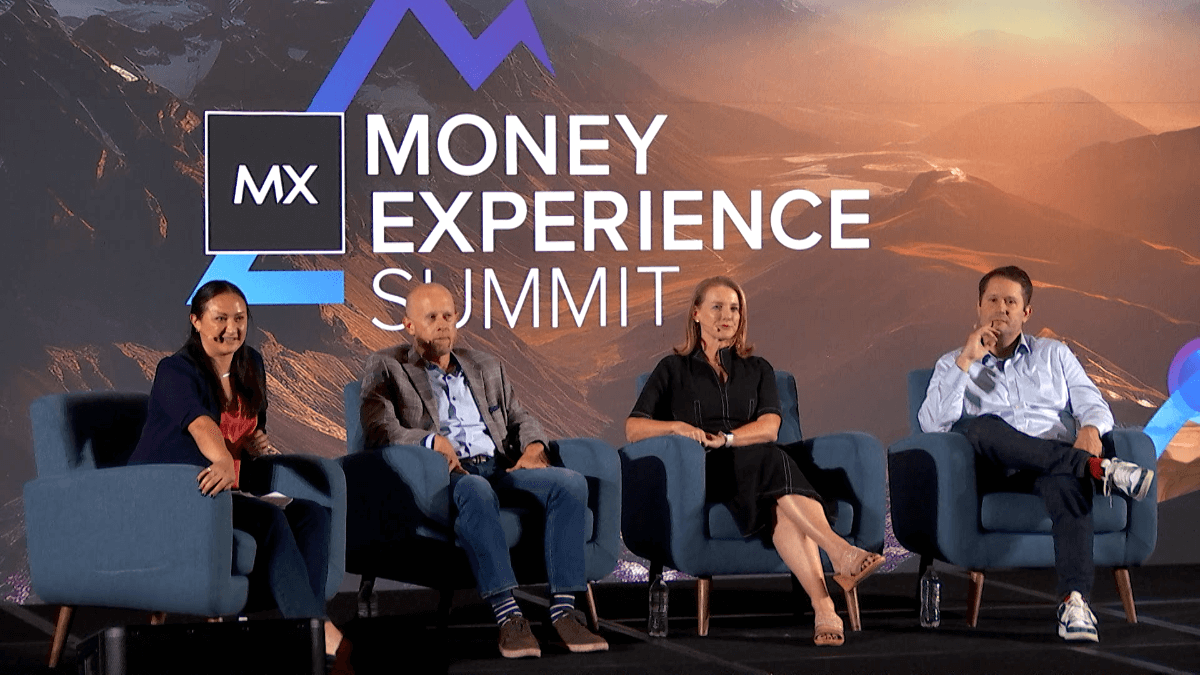
Let’s face it, fraud sucks and it’s only getting harder to combat. Every step forward we take in the financial industry comes with bad actors trying to warp new technologies for their own gain. Fighting fraud means understanding how it has changed and leveraging data to predict where vulnerabilities will pop up next. In this session, we will discuss the ways fraud has changed and how to use data to defend against it now and in the future.
Transcript
Hi everyone.
I'm Maisie Clark Bilotti.
I'm the Senior Director of Advocacy at MX
and I'll be facilitating today's discussion
of fighting fraud with data.
I think we summarized it well in the
description of this panel.
Fraud totally sucks.
Every technological leap forward in the financial services
space seems to be met with new attempts from bad actors
to exploit those same innovations for their own gain.
Reported losses
to fraud have soared since the pandemic in 2020.
According to the FTC,
consumer fraud losses reached over $12.5 billion in 2024,
which is a 25% increase over the previous year.
Let that sink in. That is a shocking
and horrible rate of change.
And this isn't just large sophisticated heists
that you might think about on, you know,
a movie or something.
This is a widespread issue that impacts millions
of individuals and businesses every year.
The key to staying ahead
of these threats isn't just reacting to them as they happen,
but using data to understand how fraud has changed
and to predict where the next vulnerabilities may occur.
Companies and experts represented on this panel
are developing and deploying advanced tools
and strategies to combat fraud.
And MX is a proud partner to many
of these organizations,
through innovations like Secure Tokenized API connections,
Instant Account Verification
and PFM tools that help customers actually monitor their own
finances for suspicious activity.
Our discussion will focus on three areas.
The first is understanding the
evolution of fraud over time.
The second is learning how we can use data
to defend against it.
And the third is to think about how policy makers might
consider the role of government in fighting fraud.
To guide us through this conversation,
we have an exceptional group of experts,
joining me on stage.
They bring a wealth of experience from different
facets of the industry.
So I'll invite our panelists
to go down the line and introduce themselves.
If you could please tell us your name, your role,
your organization, and perhaps just a sentence
or two of why the issue of fraud is important to you
and why you chose to be on the panel today.
Great. Well, thank you very much Maisie.
Appreciate, MX hosting this panel
and, being able to join it.
My name is Brian Bender. I work with Alloy.
For those who haven't heard of Alloy.
Alloy is a fraud prevention
and identity management platform based in Manhattan.
We serve about 700 financial
and financial institution clients, fintechs, banks,
and credit unions here in North America.
And in EMEA, people, you might wonder
what is the general manager of partner solutions?
So my role is to manage the side of the business.
That is all of the data
and product partnerships that Alloy has prebuilt the API
or SDK connections into our platform so
that our clients don't have to do that.
So, I'm managing all the partnerships from everything
from Alexis, Nexus,
or Socure, all the way through to credit bureau data
and everything in between.
So, very excited to be here today
and talk about the fraud trends.
Obviously Alloy a hundred percent in fraud
prevention, identity management.
So it is core to our everyday mission
to solve for clients.
Good afternoon. I am Zoe Strickland,
a senior fellow at the Future of Privacy Forum,
and I lead their open banking program.
Before that for about my 30-year career,
I led global privacy compliance
for Fortune 10 companies in different industry sectors,
including JP Morgan, Walmart, UnitedHealthcare.
And in those roles I partnered very closely with
global security and anti-fraud measures,
and I actually led the breach response process for each
of those organizations, and I've certainly seen
my share of horror stories.
So very happy to be here to figure out
how we can reduce the fraud risk.
Thank you. Hello everyone. This is Karan Gandhi.
I work at Best Egg.
We are a consumer personal loan lending online platform,
and my role is to ensure that we are giving loans
to the right customers and it's not going on a bad actors.
So I manage the fraud
and verifications for consumer lending.
Hi everyone. I'm Nicole Lauredan. I work at Stripe.
I lead product partnerships covering our consumer product
solutions as well as our payment intelligence,
risk identification, and verification solutions.
So this is very important to me
because I do the product partnerships to ensure
that we're working with the right third party providers in
the ecosystem to bring in the right data signals so
that Stripe can offer solutions to our merchant users so
that they can accurately detect and prevent fraud.
This is very important to me
because I'm actually a victim of fraud myself.
I was scammed by a
real estate agent ad when I was trying to get an apartment
and lost a lot of money by selling it,
sending out a Zelle payment.
And so this is something that's near
and dear to me and very important,
I feel that. I was also very nearly the victim
of having my down payment stolen by an impersonator.
when I was buying a house here in Utah,
USAA caught the transaction,
my husband actually hit send on hundreds of thousands
of dollars and USAA caught it.
So if anyone here is from USAA, heck yeah,
you guys saved my bacon.
We will be customers for life for sure.
So doing a good job in the fraud space drives loyalty,
like truly nothing else.
So definitely carry that with you as you
listen to these conversations.
We're gonna kick off with the question of
how financial fraud has evolved over time
and what the biggest shifts you've seen in
how bad actors operate.
We'll start with maybe the last five years as a window,
and I'll come to you, Brian for that one.
Great.
So five years ago puts us about five months into the
pandemic and, of course the payroll protection program,
PPP came out
and that was a significant driving force for fraudsters.
They're no longer independent of what I would call mom
and pop kind of fraudsters.
These are very well funded enterprises.
Think of a company being funded
by like a venture capitalist,
operating in a sophisticated ecosystem
where there are players that specialize in each part
of the value chain to create fraud, to get the data,
to sell it, and to then, create the fraud itself.
That's part one. I think the second main change
that we've seen is, although some
of the tactics are the same, whether it's phishing
or a synthetic identity approach,
what's happening now is that these players are very powerful
and they can launch these attacks very quickly.
They can create better synthetic identities
and they can do it at scale.
And I think that's the biggest change
that we've seen over the last five years.
Lots of tactical approaches within that,
but I think those are the two main things that we've seen.
Yeah, and Zoe, I wanted to come to you
and ask, I mean, we,
we were just talking about the last five years,
but you've had such a long lens of, you know, 20,
30 years looking at these issues.
What have you seen change over time
and kind of what are your observations on on that long arc?
Oh, Lord, I, I think that
people will all probably say the same, have experienced it.
The fraudsters are very smart
and they're very dedicated to their job,
and they will use every trick
and every technology to steal money from people.
And sometimes, you know,
I was working in privacy office when Hurricane Katrina
happened and people died
and they were trying to steal money from
those families, and they're like, really?
So the motivation is out there
and it really behooves us to figure out
what those attack vectors are and to use technology
and processes and people to counteract
and always be ready, both looking forward
to the latest attack, but also shoring up all your existing
stuff, which creates risk.
Yeah, obviously AI has been a huge topic
of everything we've been talking about here today at the
conference just across the board.
Do you think AI helps in preventing fraud?
How is it empowering fraud studs?
How do we think about sort of the advent
of AI in the space of fraud?
Nicole, I'll come to you on that one.
Yeah, so companies all over the world are using AI
to automate payments functions.
So all types of functions from compliance
to customer communications to payments,
performance monitoring, but most importantly,
and what we're seeing the most in terms of
how industries are using it is for detection and prevention.
Payments is ripe for this opportunity with AI,
because it's rich in data
and micro decisions are being made real time,
it moves very quickly.
And so this is where AI comes in
and becomes very beneficial for companies to be able
to leverage tooling.
The industries that we are saying, seeing really sort
of making strides in this, it's in insurance companies,
SaaS platforms, and then the travel
and hospitality industry.
So for insurance companies,
they're really interested in claims payouts, making sure
that they can validate and verify who the client is.
So they're increasing their machine learning models on the
verification and identity front.
SaaS platforms are really interested in making sure
that they prevent fraudulent actors from onboarding
onto their platform.
They're trying to prevent account stakeholders
and they're looking at fraud patterns tied
to subscription abuse.
And then lastly, for travel
and hospitality, they have high value transactions, right?
This is your booking flights, your booking travel packages,
so increasing their ML signals so
that they can look at patterns of fraud
and stop those payments if they look risky
before they're processed.
So we're seeing a lot of
different users on Stripe's platform really dig in, want
to leverage as much data as they can
to dynamically create the solutions
that are gonna work best for their use cases.
I'll say FreshBooks is an example, DoorDash, right?
They have different models for gift cards
and order checkout for DoorDash
and Stripe's, been able to help them in this case,
create different models for different use cases
and really drive down chargebacks, for example.
Okay, that makes sense. Outside of AI,
what emerging technologies are fraudsters exploiting
to more effectively commit fraud? Brian?
Right, it's
definitely a question we wanna drill into.
I think in addition to the technologies
that they might be using, I think it's important
to always remember the tactics are remaining relatively the
same, the ways that they're trying to create fraud.
And scam folks probably are age old.
And so whether that is trying to have an improved,
document that they're coming up with,
whether it's using other technologies to try
to spoof a device that they're calling in on,
because device intelligence is typically something
that a lot of our clients are starting
to incorporate into detection of fraud
and also being able to replicate behaviors.
And so figuring out ways to get that data
from client machines, whether it's a phone or a laptop
or something like that, so
that they can replicate the swipes
and types, if you will, the swipes and clicks.
So I think those are some of the other kinds of technology.
They aren't necessarily AI-based,
but it's important to note that the AI can be applied
to those other technologies once they get it right.
So once they figure out how to spoof a technology,
then they apply AI on top of that to
make it more powerful
and accelerate how they can take advantage of a
takeover once they're successful.
Yeah, not to overindex on my personal experience,
traumatic as it was, but it just, in that case, they,
you know, imperson they hacked into the email system
of the title company and impersonated the person
that we had been working with,
with one letter difference in the email address,
everything else was exactly as it would appear.
They clearly had been tracking email address, you know,
emails sent between people to
mirror the way it would look, exact dollar amount.
I mean, it's just absolutely wild the level
of sophistication and monitoring that they do.
But it is, that is sort of an old fashioned
attack vector, I mean, at least in the last 20 years.
So it's wild.
So who is targeted
and how are they reach was a question I have for Nicole.
It's us. Along with a lot of other Americans,
it's us and many
other customers.
I'll build on what Brian shared earlier,
like who's getting targeted, how we're seeing
car testing continuing to be the most challenging
fraud vector in payments, right?
And so with AI, fraudsters are using tooling to
create very sophisticated phishing
scams that look very real.
They're setting up fake websites that also look very real,
and then they are capturing all
of these card credentials from customers.
And then to your point, Brian, they have these, you know,
sophisticated tooling that allows them in
very large mass, right?
Go ahead and test all those card credentials
and start attacking customers,
personal customer information and steal money.
This is attacking the customer.
It's also attacking the merchant
that they're impersonating online.
So we're continuing to see from an individual customer
consumer right to a merchant side, everyone is being exposed
as the sophisticated tooling is being created,
and it's just moving very quickly.
It's hard to keep up with the pace of card testing.
It looks like payments transactions alongside
legitimate transactions.
And the fraud vectors are just becoming way more
sophisticated and constantly changing in terms
of strategic approach.
So that's something I would say is top of mind
for Stripe to solve.
Yep. Karan, my next question is for you.
How do you balance a quality user experience
with fraud prevention strategies?
Does one take precedence over the other?
So the short answer is we have
to strike the right balance between what you are
creating friction versus not.
If you're too loose,
then you will have more frauds going through your system.
If you're too tight, you're going
to impact your good customers
and then the conversion rate will go down.
So what we do is we follow a framework.
So first is to be, have a precision in terms of strategy
model or data that you're using to ensure
that you are capturing the highest amount of fraud
or the benchmark that you have, right?
We know that we are not gonna catch all the fraud
because there's an impact to that.
Second is in terms of placement.
So how do you place the friction?
Is it on the upper side of the funnel, the middle
of the funnel, the lower funnel?
That plays a key role in terms of customer journey
and how they are interacting with your process.
I think the third part is in terms
of perception of the customer, right?
For example, one time passcode, right?
Every one of us is now very familiar with it, easy to use,
and it doesn't create any friction
Anymore. Six years down the line.
Or in the past this was considered as a friction.
So you have to understand the customer's
journey where they are.
I think with the MX, that's something
that we are going through, right?
When we ask someone to link the bank account, it's kind
of creating a friction, right?
In some shape and form.
But if you're able to place it in the right place in your
funnel, you're able to extract maximum benefit out of it.
That's what we trying to learn,
you know, how we can do that.
So the short answer is, yeah, it's a
balance that you had to strike.
Yep. Makes sense.
Zoe coming to you for this one.
Where do you think fraud prevention
strategies are falling short?
Do you think it's a technology, process,
or people problem typically, or perhaps all three?
Well, you know, I'm gonna say all three of course, But
I'm gonna start with people 'cause
that's always a common attack vector
and people have talked about it here in each
of the large companies I work for,
the information security folks would do
phishing attacks within the employee community
and they'd even tell them ahead,
is it gonna be happening in the next week?
And it could be the whole population
or the CEO minus one always failures always X
percent are gonna fail.
You can train them all you want and you should train them,
but recognize there's gonna be some vulnerability there.
And so then how do you get technology to help with that?
And I'm really hoping that AI can assist with that
as in a particular example, like
how do you even block those emails from coming through
to begin with, if they can recognize that,
what else can AI do to either prevent the messages
or to address them if people do click a link incorrectly
and then make sure you're up
with the latest updates technology wise.
But like I was saying before,
make sure you're looking at your
weakest parts of your organization.
So one of the largest breaches I had to manage
the company had set up a website
and it was a little tiny website
where they were having a local race.
So it wasn't even very sensitive personal information,
but the bad guys got in there because it was a vendor site
and crawled all the way into the sensitive data.
So how are you monitoring
and using technology to be aware of those risks
on the process front?
Look for breakdowns between systems.
'cause usually when someone upgrades a system,
it might create some breakages that impact
downstream users or anti-fraud efforts.
And also think about what's missing
as the attack vectors change.
What else should you be doing?
Banking community tends
to think of those as controls.
So what processes can you put in place?
Make sure they're meaningful
and make sure they're efficient.
And I would say just overall as a solution, think about
what kind of reports are being generated around this.
Make sure you're challenging the folks
who are working in fraud,
that they're really thinking about the risk correctly.
I think one mistake companies can make is
that they hire smart privacy and security folks
and they go, right, job done.
The smart people will take care of this for us
and wash their hands of it.
And that really isn't the right approach.
They need to be engaged in this like they
are other parts of the business.
And then watch out for the two extremes, right?
If you've got your security
and fraud folks telling you
everything's green, everything's perfect.
I said in one meeting, a hundred page deck,
green, green, green, green, green.
Well, guess what? They missed something.
There was a big breach and they really hadn't highlighted it
and brought the attention to it.
And on the other side, you know, can't be the sky's falling.
Everything is a disaster because people tune you out.
So how are you properly thinking about your risks
and deploying people, processes
and technology to address it?
Always looking ahead
and looking at your weak parts of your organization.
Yep. Brian, anything to add there?
Sure. I would also say they're falling
short on all three areas,
but I'll highlight maybe some different
areas and add on.
I think for technology, what we see as many institutions
are still using static one-time checks
or they are using
some other point solutions
that are not holistically capturing
what fraudsters are doing these days.
Fraudsters are very innovative, they're very fast moving,
and some of the techniques
that may have worked in the past aren't working today,
like they could on like a holistic fraud
prevention platform.
I think on the process side,
I think folks are really trying to have processes in place
to catch, and they've, we're all working on this.
What we see sometimes is that the processes may be siloed.
So you've got a compliance process,
you've got a fraud process,
and you have a credit risk process.
Those three processes may be happening independently
or asynchronously connecting.
What that means is there are gaps in those processes
and of course the fraudsters exploit those gaps.
So the processes really need to be
synchronous working together across all three.
And I think the last piece that I would highlight
around people is what we're just seeing is the fraud teams
are just under-resourced compared to the volume
of fraud that's coming through.
And so, especially if you take the technology
and the process side of that, you know, they need tools
or more people, more training as you just pointed out.
But they also need the tools that can enable them
to really scale their ability to confront
and prevent all the fraud.
Thanks. Related to that question for Nicole.
How do we build fraud strategies
and systems that adapt fast enough to match the speed?
It feels like crimes, you know, online crimes
and criminals always seem to adapt the quickest to the,
a new technology and the rest of the world, is sort
of like in follow mode.
So how do we get there first?
So the answer is data. Data is critical here.
In order to keep up with the pace of the changing vectors,
you have to invest in robust data to solve the problem.
I will put in one little shameful stripe plug.
There is a chance that any card transaction that happens,
92% chance that Stripe has seen
that card transaction at least one time
or that card one time on Stripes network.
So we're able to pull all of
that data right from those transactions,
build them into our ML models
and offer risks, insights, different tooling data
that our users can leverage
to dynamically create different automated tools
that they need to keep up with the pace.
But the reality is each company is going to need
to make their own decisions here.
It's just really important to stay current on the data
that is out there, which companies are moving fast
to keep up with the changing vectors, Brian, your company.
But how do you partner, right?
To bring in the data sets that you need to really automate
and create what is gonna be best suited
for your business problems.
So yeah, I think really data is important.
Okay, thanks. Switching over to our third sort
of bucket of things we wanna cover here.
Zoe question for you, we can kick us off.
What should policy makers
and regulators be thinking about
to be proactive in this space with emerging threats?
Again, policy makers love them, work with them a lot,
sometimes a year
or five behind where we need to be technologically.
How do we help them?
Yeah, and it's interesting particularly in this space
because sometimes they shy away from technology issues
because they don't know it.
Remember the congressman
or senator talked about the internet being a series of tubes
that was fun.
So, but they shouldn't expect to be the top experts.
They're just never gonna be, they're not frontline.
And there are many ways they can still be helpful.
And so for policy makers, yes, be technology agnostic,
but they should also incentivize good
behavior and good relationships.
And they can do things like, okay,
let's require security personnel
and security standards and anti-fraud measures.
And amazingly that's actually not a federal standard
except in a very large sense the crime is bad.
But to actually require companies
to develop programs around it.
And then do things like set accountability.
So like in Open Banking, you know,
once you get the data you should
be accountable to manage it.
And I think if those kind of things were clarified,
that would help some of the liability questions that happen.
And they do need to think about how you balance privacy
and security, which you
and I have talked about, about quite a bit,
which is absolutely as a privacy person,
I wanna protect the data from
inappropriate access even internally.
But you've gotta enable uses
that allow fraud to be combated.
And so they've gotta think through that
and not just sort of
toss it out there and hope for the best.
For regulators, I do think it helps them to think
through how they really are tackling the risk,
which is their role, and not to be chasing nets.
'cause sometimes that happens too, both from
what they write in the regulation or how they enforce it.
And so a story there for, I don't know if everyone
remembers clean desk used to be a big thing.
And of course you don't wanna have confidential data on
your desk, of course you
don't and you should manage that.
But we had an enforcement action,
so the whole company, that's all they did.
And you know, this woman put police tape all over someone's
office who would violate the rules.
But you've gotta put your risk profile in context
and you've gotta really balance your highest
risk and go after those.
And policy makers
and regulators should really help drive that.
And they really should be listening to industry
and consumer groups' voices
because they really can't educate them.
And that's a very appropriate role, I think, for industry
to take to help them understand where it's going,
what kind of fraud we're seeing,
and what role they can have to help reduce it
because the consumer impacts are real and serious.
Yeah, and just to sort of echo
what Brian was saying at the enterprise level
with some underinvestment in staffing
and potentially funding,
I think the government faces a similar issue where they're
multiple departments that have, you know, fraud programs
that are really important and meaningful.
And, I hope that Congress continues to
authorize the important funding that's needed for that.
Moving on to a sort of the wrap up question
for everyone gonna kick it off with Karan,
looking into your crystal ball,
where do you think fraud is going in the next five years?
Where should we be anticipating the most, problems?
Okay, let me ask a question to audience.
How many of you have heard about
Telegram as a Messenger app?
Oh, yes. Alright. And dark web. Yeah.
So there's a lot of information being sold out there.
There are marketplaces out there
where you can buy credit card data
information, BI information.
So she mentioned about using data to combat fraud,
but they have a lot of data to do the fraud as well.
Mm-hmm. So that's one of the things
that is being very easy now to have and access to it.
The tools have become very sophisticated.
That's an easy, so I think what I feel is
that the access to information
that they have has become much more easier.
So you're gonna see a lot of targets happening
because of that and a lot of that is causing that.
Other thing is
what we're seeing is rising bot track, right?
With AI it's easy to spin off a bot
and attack an institute and get information.
So we'll see a lot of bot track going forward.
And that's where we have to be very resilient in terms
of how we tackle bots.
A second is consortium based.
Data sharing is very important as a,
from a fraud perspective because fraud always moves.
So if you're able to share data,
you can prevent fraud at some other places that,
and I think lastly, I feel like we are going
to be in a situation, place five down the line
where people are using AI or AI agents to shop somewhere
or book a restaurant.
Tomorrow they'll be applying
for loans using AI agents.
So we need to figure out who's a good AI agent versus a bad
AI agent, and whom should we allow to apply
for loans or something else.
So I think that's where we'll be going towards
and finding a solution on how to tackle that
on device agents.
Scare me, Nicole, come be
Next. I'll build on
that.
Because where I see it in five years is actually centered
around AI agents and it's going to be for good
and for not good, right?
So on the not good side, agentic commerce is going
to become mainstream.
With that we're going to see an increase in card attacks,
account takeovers, particularly as platforms are trying
to figure out this concept of a global wallet
as more credentials are brought onto these commerce
platforms, how do we make sure right that we stay up
to speed with the fraud vectors
that are gonna come in Agentic commerce.
The second thing is AI agents are actually gonna make our
fraud teams' lives easier, right?
So all the automotive tooling that we have out there,
manual reviews that fraud teens have to do, I think
that's gonna actually improve.
So I see that becoming a good thing.
And then the last thing is with generative AI,
making it very easy for fraudsters to create fake IDs
and profiles and false documents,
it's gonna be really important for companies
to think about the authentication side of this with AI.
How do we think about biometric and pass keys?
What are the next steps to really validate
who merchants and consumers are?
And also knowing your agent, KYA,
is going to be the next thing.
You have to know the agent.
We have to know that if we're sharing data
and permissions with agents, can we trust
that they're gonna do the right things for consumers?
So a lot to come, but I think AI agents
is number one for me.
Yep. Zoe, over to you.
So what I'm gonna say is I've always been in legal
and compliance, so I'm not gonna be the forefront either,
but a huge respect to the people on this panel
who are deep experts.
And if you are in a support role, be that support role, say,
Hey look, how am I learning what these problems are?
How am I helping avoid the separate processes
that aren't speaking to each other
and everyone doing their own separate reporting?
How do you help that? And
that would be extremely valuable for your company.
Brian. I have highly agree with both of
another panelists on their view.
I think know your agent is absolutely one of the main areas
and I'll broaden that out to say the new capabilities
and tools that we're all going to be exploring
to better serve our customers will be the
attack vector in the future.
Plain and simple because they're new,
it's an easier target than some
of these well defended areas that we've
as fraud fighters have all developed.
So I think I would also take it to show as fraud fighters,
an optimistic view going forward.
My company,
my team just in the past week reviewed the 250 solutions
that are connected.
And now I said, how many of those are AI powered?
Turns out over 60%
of those solutions are actively AI powered today,
which is up dramatically over the recent time.
And many of the others are simply tools
that are retrieving data from a discreet
stochastic database, if you will.
And this is across many different areas,
whether it's a fraud risk signal, a credit risk signal,
certainly documentation and picking up on faults
and documents or behavioral or intelligence.
They're really the broad spectrum.
And so the way I see it is the fraudsters are
gonna be out there doing their thing.
That's what they wanna do.
They're not bound by laws or restrictions like we are.
But we have an incredible opportunity as fraud fighters
to continue this level of investment
and apply these new technologies
and new approaches to defeat the fraud going forward.
Awesome. Thank you so much for all these insights.
Very inspiring for me.
As I think about fight, I wanna be a
fraud fighter like you guys.
So I like that term.
We're gonna open it up to questions for the audience.
If you have any questions, don't be shy.
We have one person behind and then then we'll come to
you. Thank you.
So the KYA thing is fascinating.
I'm curious whether, as that matures,
you think there's gonna be a similar dynamic that we saw
with, screen scraping relative to API calls
where like for a while you are gonna have
to separate the wheat from the chafe
because maybe these agents are using
novel new mechanisms to access data
and you don't know which ones are legitimate
and which ones are not.
You want to take that? Yeah. Yeah.
So I think we have to find a device solution,
which is like going to be able to, for you to understand
who's coming to your door, right?
The way one can achieve a,
so from biometric or education.
Like if I can authenticate through my iris or my fingerprint
and say this is a customer that I already know
and that's how I would let this agent now go in, right?
So there has to be device, something like that,
that will help us to authenticate
that this is a my agent versus not
a good agent or something like that. Yeah.
It has to be like persistent 'cause the agent is gonna,
Yeah. Yeah.
So yeah, we allowed to be,
I mean it's still evolving, right?
We are not there yet, so try
to understand like right now we are,
we also have like good bot versus bad bot, right?
So if you have a website, there will be like bots,
like let's say LinkedIn looking at your website
to figure out what job folder do you have.
There's some marketing websites
or looking at content on your website.
You still have capability to understand, you know,
where they're coming from, how, what they're doing.
So you have to keep monitoring that as well to understand
what exactly are they doing, are they gonna hit your funnel,
what kind of IP addresses are coming up.
So those are still the important information that we have,
but this is something that, you know, we will have
for you all as we see more
of those agents coming through our door.
Mary had a question. Yeah. I, oh sure.
Okay. I don't know if this is being looked at at all.
Shout out to Alloy, we use it, I'm at Granite Credit Union.
We love it. You can open an account really fast
and the fraud stuff's great.
Okay, so it would be really cool
if you could see when people log in from the wrong IP
or some bad actor is on an IP when they're trying
to log into people's mobile banking
because either the person's given out their stuff
or it's been taken
because that would actually prevent a lot of fraud.
And I just think about actually many takeover
account style things.
If there was some control like that, they could
more identify those IP addresses and then stop it.
Brian Bender is the GM of Partner Solutions at Alloy, the leading identity and fraud prevention platform provider. A 20-year veteran in retail and financial services, Brian is responsible for establishing, growing, and operating the network of over 80 partners and 250 solutions on Alloy’s platform. Brian's expertise lies in data and channel partnerships, global business development, and cross-functional team leadership. His career includes strategic roles at Bain & Company, American Express, Experian, and 1010data.
Maisie Bilotti is the Senior Director of Advocacy at MX, focusing on financial data policy issues and consumer advocacy. She previously worked for Google for 14 years in a variety of roles including congressional relations, privacy and competition policy, and partnership strategy.
Karan Gandhi is a seasoned leader in credit strategy, fraud management, and portfolio optimization. Currently serving as the Senior Director of Credit Strategy at Best Egg, Karan spearheads the fraud and verification operations for a wide array of lending products at Best Egg.
Nicole Lauredan is an accomplished leader in global partnerships at Stripe, where she leads a team focused on driving innovation across payments, commerce, and risk management. Known for her expertise in product partnerships, Nicole has delivered industry-first solutions, including launching Google Pay’s mobile transportation launches in major global cities and leading Stripe’s partnership with Apple to bring Tap to Pay on iPhone to market.
Passionate about increasing diversity in tech, Nicole frequently speaks at various industry events and is deeply committed to mentorship and empowering underrepresented communities. Her leadership earned her recognition as a 2024 ETA 40 Under 40 professional.
Nicole's career foundation was built at JPMorgan Chase, where she honed her expertise in strategy, operations, and finance. She holds an MBA from the Tuck School of Business at Dartmouth College and a BA from Brown University. Nicole lives in Los Angeles with her husband, daughter, and dog.
Zoe is a Senior Fellow at the Future of Privacy Forum (FPF). She leads its Open Banking Program, bringing together stakeholders across this complex financial landscape. Over a 30-year career, Zoe served as head of global privacy and other roles for Fortune 20 entities, including in banking (JPMC), healthcare (UHG and Cigna), retail (WMT) and government (USPS).
Zoe serves as co-chair for non-commercial entities on the Board of Directors for the Financial Data Exchange. Previously she served on the IAPP Board of Directors, and led the bank subgroup for the Business Roundtable regarding new privacy approaches. Other memberships included: GS-1 privacy workgroup (co-chair); privacy/security subcommittee of the Council for Excellence in Government (co-chair); AHIP Privacy & Confidentiality Work Group; HLC Confidentiality Coalition; RIM Council; RILA privacy/security workgroup; and FPF Advisory Board.
Zoe is a frequent speaker at industry events, including keynotes at the 2022 FDX Global Summit, 2016 Executive Women’s Forum, and 2015 IAPP Asia-Pacific conference. She’s been quoted in several media sources like the New York Times, USA today.com, the Economist, and National Public Radio, and has testified at subcommittees of the House Energy and Commerce Committee.
FPF is a non-profit organization that serves as a catalyst for privacy leadership, advancing principled data practices in support of emerging technologies. FPF brings together industry, academics, consumer advocates, and other thought leaders to explore the challenges posed by technological innovation and to develop privacy protections, ethical norms, and workable business practices. Through research, publications, educational meetings, expert testimony, and other activities, FPF works with organizations and governments to shape best practices and policies in the United States and globally.